
Mastering Noise Control: Your Guide to Commercial Acoustic and Impact Sound Insulation Flooring
What Are the Top Commercial Acoustic Flooring Options for Quieter Spaces?
- Rubber composite tiles featuring a closed-cell underlay to absorb both footfall and airborne noise.
- Vinyl flooring enhanced with mass-loaded vinyl (MLV) backing for superior barrier performance.
- Cork flooring paired with acoustic cork underlayment to provide natural sound damping.
- Carpeting systems with heavy backing and cushioned pads specifically engineered for sound absorption.
How Does Commercial Acoustic Flooring Effectively Reduce Noise in Workspaces?
Which Materials Excel in Commercial Acoustic Flooring?
| Material | Acoustic Rating (dB) | Typical Use |
|---|---|---|
| Rubber Composite | 18–22 | High-traffic corridors, open offices |
| Cork with Underlay | 15–18 | Meeting rooms, executive suites |
| Vinyl with MLV | 16–20 | Retail spaces, breakout areas |
| Carpet Tile System | 17–21 | Call centers, training rooms |
Cork Chronicles: The Acoustic Benefits of Cork Flooring
Cork flooring demonstrates strong sound absorption properties, with a Noise Reduction Coefficient (NRC) of 0.7, indicating it absorbs 70% of sound waves. A 3mm cork layer can reduce sound by up to 10 decibels, while a 12mm cork underlayment can achieve reductions of up to 48 decibels, making it effective for both airborne and impact noise.
What Are the Advantages of Installing Acoustic Flooring in Commercial Buildings?
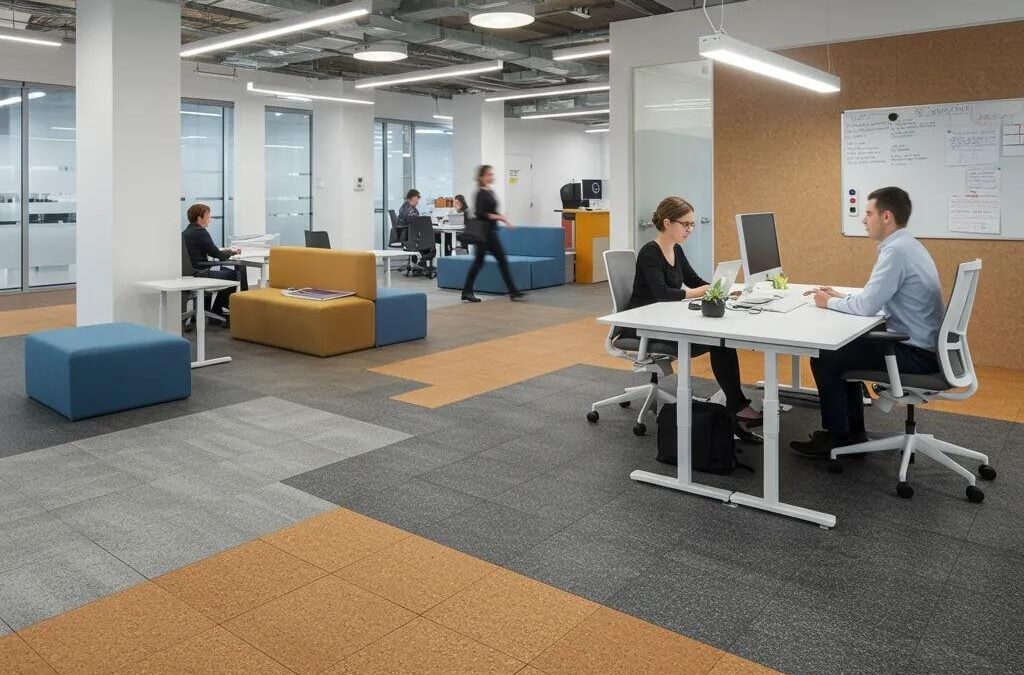
- Sharper concentration and greater privacy in open-plan offices.
- Fewer noise-related complaints in multi-tenant developments.
- Enhanced safety thanks to slip-resistant, cushioned surfaces.
- Potential for reduced energy costs by allowing quieter HVAC system operation.
How Commercial Flooring Enhances Acoustic Performance and Productivity in Open Office Designs
Research indicates that high noise levels in the workplace can significantly hinder employee performance, leading to a 66% decrease in productivity and a 50% rise in errors. Implementing sound-absorbing flooring solutions can mitigate these issues, fostering a more focused and efficient work environment.
How Can Gym Soundproofing Flooring Elevate Noise Control and Safety?

What Types of Soundproofing Flooring Are Best Suited for Gyms?
- Interlocking rubber tiles designed to handle heavy equipment drops and absorb impact forces.
- Poured-in-place polyurethane systems that create a seamless, resilient surface.
- Modular foam-rubber hybrid panels specifically engineered for weight-lifting platforms.
How Does Gym Flooring Influence Noise and Impact Sound Insulation?
What Are the Key Installation Considerations for Gym Soundproofing Flooring?
- Ensuring the subfloor is perfectly level and completely dry to prevent adhesive failure.
- Incorporating expansion gaps around the perimeter to accommodate natural material movement due to temperature changes.
- Selecting adhesive or mechanical fastening systems robust enough for high-traffic, high-impact loads.
Which School Noise Reduction Flooring Solutions Foster Better Learning Environments?
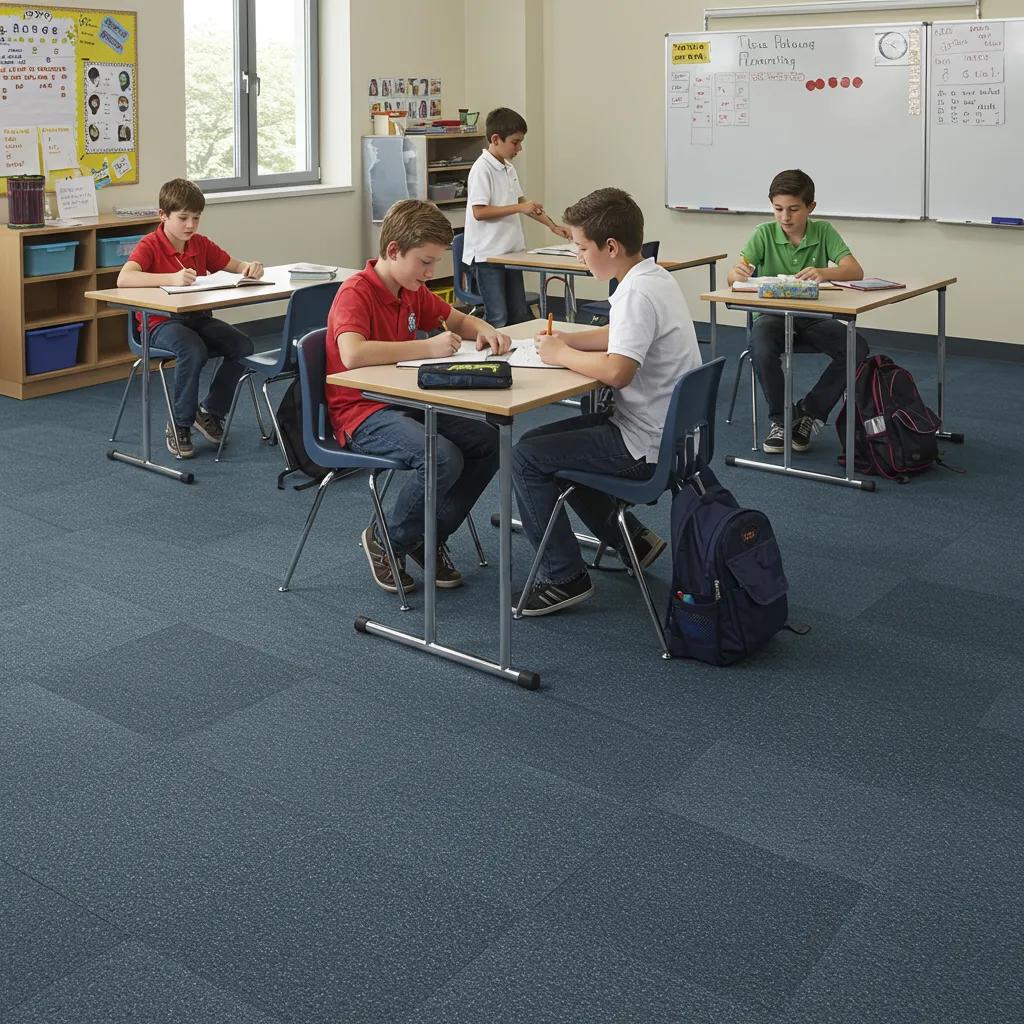
How Does Acoustic Flooring Contribute to Noise Reduction in Schools?
What Flooring Materials Are Recommended for Reducing Noise in Schools?
- Cork composites, known for their natural resilience and hypoallergenic qualities.
- Rubber tiles, providing easy-to-clean surfaces and excellent slip resistance.
- Acoustic vinyl, specifically designed to meet stringent hygiene and fire safety regulations.
How to Select Durable and Safe Noise-Reducing Flooring for Schools?
- Acoustic performance ratings to confirm adequate noise reduction capabilities.
- Slip and fall safety certifications to ensure the protection of students and staff.
- Maintenance requirements and projected service life under heavy foot traffic conditions.
What Are Acoustic Underlay Solutions and How Do They Boost Noise Reduction?
How Do Acoustic Underlays Work with Various Flooring Types?
Which Acoustic Underlay Materials Offer Superior Impact Sound Insulation?
| Underlay Type | Density (kg/m³) | Decoupling Performance (ΔLw) |
|---|---|---|
| Cross-linked Polyethylene | 35 | 18 dB |
| Foamed Rubber | 50 | 21 dB |
| Cork Composite | 40 | 17 dB |
Can Acoustic Underlays Be Installed in Existing Floors?
How Does Impact Sound Insulation Flooring Minimize Noise from Footsteps and Vibrations?
What Are the Key Characteristics of Impact Sound Insulation Flooring?
| Feature | Description | Impact Benefit |
|---|---|---|
| Mass Loaded Core | High-mass layer enhances acoustic barrier properties | Reduces airborne transmission |
| Viscoelastic Membrane | Converts vibrational energy into thermal energy | Effectively dampens impact noise |
| Decoupling Underpad | Separates the finished flooring from the subfloor | Interrupts structure-borne sound pathways |
| Resilient Surface Finish | Provides cushioning and improved slip resistance | Enhances safety and occupant comfort |
Which Flooring Systems Deliver Optimal Impact Noise Reduction?
- Multi-layer rubber sheet systems with integrated bonded underlays.
- Engineered wood floors featuring built-in acoustic pads.
- Ceramic tile assemblies utilizing polymeric backer boards.
How Is the Effectiveness of Impact Sound Insulation Flooring Measured?
- ΔLw (Delta Lw), which measures impact sound level reduction.
- Rw (Weighted Sound Reduction Index), assessing airborne noise performance.
- IIC (Impact Insulation Class) ratings, commonly used in residential contexts.
Controlling the Transmission of Impact Sound through Floors
The Impact Insulation Class (IIC) is a standardized rating that quantifies a floor-ceiling assembly's ability to reduce structure-borne impact noise, such as footsteps or dropped objects. Derived using a standard tapping machine as stipulated in ASTM method E492, and calculated following ASTM method E989, a higher IIC value signifies better impact sound attenuation.
What Are the Latest Advancements in Noise-Reducing Flooring Technologies?
How Are New Materials Enhancing Acoustic Performance?
What Smart Flooring Solutions Are Emerging for Noise Control?
How Do Sustainable Noise-Reducing Flooring Options Compare?
| Option | Eco-Feature | Noise Reduction |
|---|---|---|
| Recycled Rubber Composite | Made from 100% recycled tire content | 20–25 dB |
| Bio-based Cork Panels | Sourced from rapidly renewable harvests | 15–18 dB |
| Plant-derived Polyurethane | Low VOC emissions and carbon neutral | 17–20 dB |
How to Select and Maintain Noise-Reducing Flooring for Lasting Performance?
What Factors Should Guide Your Flooring Selection for Noise Reduction?
- Target decibel reduction levels, determined by the specific function of the space.
- Anticipated traffic volumes and potential equipment impacts.
- Environmental conditions, such as moisture levels and temperature fluctuations.
- Ongoing maintenance needs and budget limitations.
How Frequently Should Noise-Reducing Flooring Be Inspected and Maintained?
What Are Common Maintenance Best Practices for Acoustic and Impact Insulation Floors?
- Clean surfaces using pH-neutral cleaners to prevent damage to adhesives.
- Promptly inspect and replace any worn tiles or damaged underlay sections.
- Apply protective finishes or sealants to minimize surface abrasion.