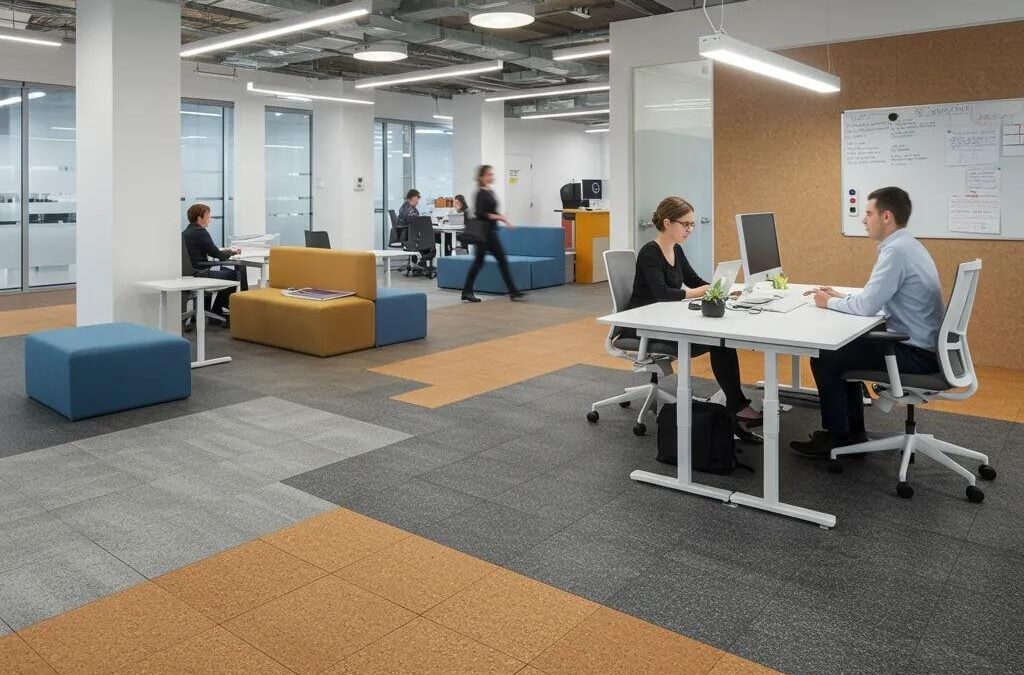
Mastering Noise Control: Your Guide to Commercial Acoustic and Impact Sound Insulation Flooring

Unwanted echoes and the clatter of footsteps can really disrupt productivity, safety, and the overall comfort in any commercial space. Noise-reducing flooring tackles airborne sound and impact vibrations right at the source by skillfully combining specialized underlays, damping materials, and advanced surface designs. In this guide, we’ll dive into commercial acoustic flooring choices, gym-grade soundproofing, solutions tailored for schools, underlay technologies, impact sound insulation systems, the latest innovations, and best practices for long-term care. Whether you’re overseeing athletic facilities, educational campuses, or corporate offices, understanding these noise-control strategies is key to selecting and maintaining flooring that performs optimally.

What Are the Top Commercial Acoustic Flooring Options for Quieter Spaces?

Commercial acoustic flooring is designed with dense substrates and damping layers to soak up airborne noise and minimize sound reflection. By integrating high-mass cores with viscoelastic membranes, these systems effectively reduce sound energy before it travels upwards or sideways. For example, a rubber composite tile with a built-in foam layer can cut down ambient noise by as much as 20 dB, significantly boosting privacy and focus in open-plan offices.

Here’s a look at the leading commercial acoustic flooring categories that deliver dependable noise control:

  1. Rubber composite tiles featuring a closed-cell underlay to absorb both footfall and airborne noise.
  2. Vinyl flooring enhanced with mass-loaded vinyl (MLV) backing for superior barrier performance.
  3. Cork flooring paired with acoustic cork underlayment to provide natural sound damping.
  4. Carpeting systems with heavy backing and cushioned pads specifically engineered for sound absorption.

These categories offer adaptable solutions for conference rooms, hallways, and multi-purpose areas. Delving deeper into material selection reveals specific performance traits and common applications.

How Does Commercial Acoustic Flooring Effectively Reduce Noise in Workspaces?

Commercial acoustic flooring works by transforming sound energy into heat within its viscoelastic layers, thereby dampening airborne waves and impact vibrations. This process interrupts sound transmission through structural pathways, significantly reducing reverberation times in busy environments. For instance, rubber tiles with sound-deadening cores absorb impact shock and cushion footsteps, preventing noise from traveling to adjacent work areas and floors. Understanding this functional interaction is crucial for selecting the right product for each specific workspace type and occupancy level.

Which Materials Excel in Commercial Acoustic Flooring?

Effective materials combine mass, damping capabilities, and resilient surfaces to tackle both airborne and impact sound:

MaterialAcoustic Rating (dB)Typical Use
Rubber Composite18–22High-traffic corridors, open offices
Cork with Underlay15–18Meeting rooms, executive suites
Vinyl with MLV16–20Retail spaces, breakout areas
Carpet Tile System17–21Call centers, training rooms

Cork Chronicles: The Acoustic Benefits of Cork Flooring

Cork flooring demonstrates strong sound absorption properties, with a Noise Reduction Coefficient (NRC) of 0.7, indicating it absorbs 70% of sound waves. A 3mm cork layer can reduce sound by up to 10 decibels, while a 12mm cork underlayment can achieve reductions of up to 48 decibels, making it effective for both airborne and impact noise.

This citation validates the acoustic performance claims for cork flooring, including its NRC rating and specific decibel reduction capabilities, as highlighted in the article’s discussion on effective materials for commercial acoustic flooring.

What Are the Advantages of Installing Acoustic Flooring in Commercial Buildings?

Installing acoustic flooring in commercial buildings significantly enhances occupant comfort, improves speech clarity, and reduces stress levels. It also aids in meeting building regulations for noise levels and can contribute to environmental certification credits. Key benefits include:

  • Sharper concentration and greater privacy in open-plan offices.
  • Fewer noise-related complaints in multi-tenant developments.
  • Enhanced safety thanks to slip-resistant, cushioned surfaces.
  • Potential for reduced energy costs by allowing quieter HVAC system operation.

How Commercial Flooring Enhances Acoustic Performance and Productivity in Open Office Designs

Research indicates that high noise levels in the workplace can significantly hinder employee performance, leading to a 66% decrease in productivity and a 50% rise in errors. Implementing sound-absorbing flooring solutions can mitigate these issues, fostering a more focused and efficient work environment.

This research directly supports the article’s assertions regarding the benefits of installing acoustic flooring in commercial buildings to boost concentration and lower stress, ultimately improving employee satisfaction and operational efficiency.

These advantages translate into tangible improvements in employee satisfaction and operational efficiency, paving the way for healthier work environments and seamless regulatory compliance.

How Can Gym Soundproofing Flooring Elevate Noise Control and Safety?

Person preparing to lift a barbell with weight plates on soundproof flooring in a gym setting, emphasizing noise control and safety for high-energy activities.

Gym soundproofing flooring is specifically engineered to absorb the impact from high-energy activities and heavy equipment drops through its resilient layers and impact-absorbing cores. By integrating shock-absorbing foams with durable, wear-resistant surfaces, these systems protect the subfloor, minimize noise bleed into adjacent areas, and provide a safer, cushioned surface for athletes. For instance, a dual-layer gym mat system combines an EVA foam base with a high-density rubber top layer to deliver both exceptional safety and effective sound insulation.

What Types of Soundproofing Flooring Are Best Suited for Gyms?

Gym environments require flooring materials that can withstand heavy impacts and resist wear and tear. The ideal soundproofing flooring types include:

  1. Interlocking rubber tiles designed to handle heavy equipment drops and absorb impact forces.
  2. Poured-in-place polyurethane systems that create a seamless, resilient surface.
  3. Modular foam-rubber hybrid panels specifically engineered for weight-lifting platforms.

These products offer robust noise isolation and exceptional durability under demanding, dynamic loads.

How Does Gym Flooring Influence Noise and Impact Sound Insulation?

Gym flooring minimizes noise through a layered energy dissipation process: a dense rubber surface disperses direct impact sound, while a foamed undercore converts vibration into heat. This dual-stage mechanism effectively reduces structure-borne noise transmission to lower floors and surrounding rooms. In practical terms, a weight dropped on a rubber mat can result in noise levels over 30% lower compared to a concrete subfloor, creating a safer and more controlled workout atmosphere.

What Are the Key Installation Considerations for Gym Soundproofing Flooring?

Successful installation depends on meticulous surface preparation, material compatibility, and proper load distribution. Crucial factors include:

  • Ensuring the subfloor is perfectly level and completely dry to prevent adhesive failure.
  • Incorporating expansion gaps around the perimeter to accommodate natural material movement due to temperature changes.
  • Selecting adhesive or mechanical fastening systems robust enough for high-traffic, high-impact loads.

Correct installation guarantees consistent acoustic performance and extends the product’s lifespan, preparing the floor for rigorous athletic use.

Which School Noise Reduction Flooring Solutions Foster Better Learning Environments?
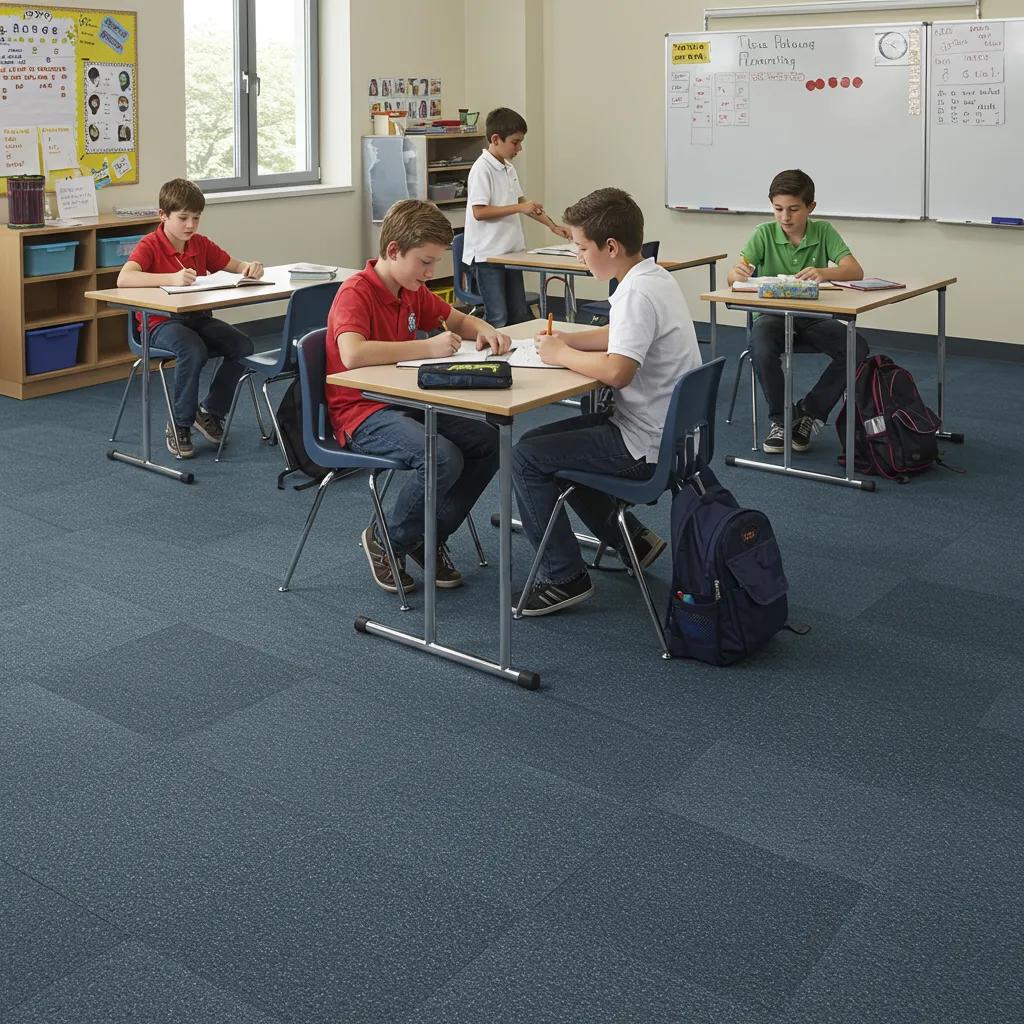
Students engaged in classroom activities on sound-dampening flooring designed to enhance focus and reduce noise distractions.

School noise reduction flooring utilizes soft surfaces and sound-dampening underlays to minimize the distractions of chatter and footsteps, thereby enhancing student concentration and reducing auditory stress. By combining eco-friendly cushioning with durable finishes, these systems meet both acoustic and safety standards essential for learning spaces.

How Does Acoustic Flooring Contribute to Noise Reduction in Schools?

Acoustic flooring in schools effectively lowers ambient noise by absorbing mid-range frequencies common in speech and movement, which in turn reduces reverberation times in classrooms and hallways. This absorption improves teacher-student communication and supports inclusive learning for students with auditory sensitivities. For example, cork-backed vinyl tiles can decrease noise levels by up to 25%, making classrooms significantly more conducive to focused instruction.

Various materials offer distinct performance and safety advantages for educational settings:

  • Cork composites, known for their natural resilience and hypoallergenic qualities.
  • Rubber tiles, providing easy-to-clean surfaces and excellent slip resistance.
  • Acoustic vinyl, specifically designed to meet stringent hygiene and fire safety regulations.

These materials strike a balance between effective noise control, long-term durability, and ease of maintenance, promoting a safe and quiet learning environment.

How to Select Durable and Safe Noise-Reducing Flooring for Schools?

Choosing the right school flooring involves a careful evaluation of several key aspects:

  1. Acoustic performance ratings to confirm adequate noise reduction capabilities.
  2. Slip and fall safety certifications to ensure the protection of students and staff.
  3. Maintenance requirements and projected service life under heavy foot traffic conditions.

Prioritizing these criteria ensures the flooring provides lasting acoustic comfort and safety throughout the school’s operational lifecycle.

What Are Acoustic Underlay Solutions and How Do They Boost Noise Reduction?

Acoustic underlays serve as a critical damping interface between hard surface floors and the underlying subfloors, significantly improving both impact and airborne noise insulation. By employing viscoelastic materials or decoupling felts, these underlays effectively interrupt vibration transfer and absorb airborne sound before it can reach occupied areas.

How Do Acoustic Underlays Work with Various Flooring Types?

Underlays function by creating a resilient layer that isolates rigid floor coverings—such as wood, laminate, or tile—from direct contact with the subfloor. This separation minimizes structural coupling, resulting in less vibration and reduced footstep noise. For instance, a foam rubber underlay installed beneath a laminate floor can decrease impact sound transmission by as much as 20 dB.

Which Acoustic Underlay Materials Offer Superior Impact Sound Insulation?

Underlay TypeDensity (kg/m³)Decoupling Performance (ΔLw)
Cross-linked Polyethylene3518 dB
Foamed Rubber5021 dB
Cork Composite4017 dB

Can Acoustic Underlays Be Installed in Existing Floors?

Absolutely, many acoustic underlays are designed for retrofit applications, eliminating the need for major demolition. Options include loose-lay underlay rolls placed beneath floating floors and adhesive-bonded felts applied before the new surface is installed. This retrofit capability allows for noise control upgrades in occupied buildings with minimal disruption, seamlessly connecting to the impact insulation strategies discussed next.

How Does Impact Sound Insulation Flooring Minimize Noise from Footsteps and Vibrations?

Impact sound insulation flooring integrates mass, resilience, and decoupling structures to specifically target structure-borne noise generated by footsteps, dropped items, and equipment operation. A properly specified system will intercept vibrational energy at the surface and attenuate it through specialized core layers, thereby minimizing sound propagation to lower levels.

What Are the Key Characteristics of Impact Sound Insulation Flooring?

FeatureDescriptionImpact Benefit
Mass Loaded CoreHigh-mass layer enhances acoustic barrier propertiesReduces airborne transmission
Viscoelastic MembraneConverts vibrational energy into thermal energyEffectively dampens impact noise
Decoupling UnderpadSeparates the finished flooring from the subfloorInterrupts structure-borne sound pathways
Resilient Surface FinishProvides cushioning and improved slip resistanceEnhances safety and occupant comfort

Which Flooring Systems Deliver Optimal Impact Noise Reduction?

For superior impact noise control, consider these options:

  1. Multi-layer rubber sheet systems with integrated bonded underlays.
  2. Engineered wood floors featuring built-in acoustic pads.
  3. Ceramic tile assemblies utilizing polymeric backer boards.

The selection of the right system depends on the desired noise reduction targets and the required performance characteristics of the surface.

How Is the Effectiveness of Impact Sound Insulation Flooring Measured?

Effectiveness is quantified using established metrics such as:

  • ΔLw (Delta Lw), which measures impact sound level reduction.
  • Rw (Weighted Sound Reduction Index), assessing airborne noise performance.
  • IIC (Impact Insulation Class) ratings, commonly used in residential contexts.

Controlling the Transmission of Impact Sound through Floors

The Impact Insulation Class (IIC) is a standardized rating that quantifies a floor-ceiling assembly’s ability to reduce structure-borne impact noise, such as footsteps or dropped objects. Derived using a standard tapping machine as stipulated in ASTM method E492, and calculated following ASTM method E989, a higher IIC value signifies better impact sound attenuation.

This citation provides a verified definition and methodology for the Impact Insulation Class (IIC), a key metric discussed in the article for measuring the effectiveness of impact sound insulation flooring.

Regular testing against these metrics confirms that installed flooring meets specified acoustic targets and informs effective maintenance planning.

What Are the Latest Advancements in Noise-Reducing Flooring Technologies?

Recent breakthroughs in noise-reducing flooring leverage cutting-edge materials science, digital integration, and sustainability principles to deliver enhanced acoustic performance and environmental advantages.

How Are New Materials Enhancing Acoustic Performance?

Nanocomposite fillers and advanced engineered polymers now allow for thinner damping layers that achieve a higher conversion of vibrational energy. For example, viscoelastic gels infused with silica nanoparticles can provide the same noise reduction as traditional membranes but at half the thickness, enabling sleeker floor profiles without compromising acoustic integrity.

What Smart Flooring Solutions Are Emerging for Noise Control?

Smart flooring integrates sensor networks within its resilient layers to monitor foot traffic patterns and noise levels in real time. These systems can dynamically adjust active damping mechanisms or trigger alerts when acoustic thresholds are breached, supporting proactive noise management in high-occupancy zones.

How Do Sustainable Noise-Reducing Flooring Options Compare?

OptionEco-FeatureNoise Reduction
Recycled Rubber CompositeMade from 100% recycled tire content20–25 dB
Bio-based Cork PanelsSourced from rapidly renewable harvests15–18 dB
Plant-derived PolyurethaneLow VOC emissions and carbon neutral17–20 dB

How to Select and Maintain Noise-Reducing Flooring for Lasting Performance?

Choosing and maintaining noise-reducing flooring involves balancing acoustic objectives, usage requirements, and lifecycle costs to ensure sustained performance and a strong return on investment.

What Factors Should Guide Your Flooring Selection for Noise Reduction?

  1. Target decibel reduction levels, determined by the specific function of the space.
  2. Anticipated traffic volumes and potential equipment impacts.
  3. Environmental conditions, such as moisture levels and temperature fluctuations.
  4. Ongoing maintenance needs and budget limitations.

Carefully considering these factors allows for a customized specification that aligns noise control goals with practical site realities.

How Frequently Should Noise-Reducing Flooring Be Inspected and Maintained?

Regular inspections are advised every six months for high-traffic areas and annually for spaces with moderate usage. Critical checks should include surface wear, underlay compression, and the integrity of adhesion. Scheduled maintenance is essential for preserving acoustic performance and preventing costly future repairs.

What Are Common Maintenance Best Practices for Acoustic and Impact Insulation Floors?

  • Clean surfaces using pH-neutral cleaners to prevent damage to adhesives.
  • Promptly inspect and replace any worn tiles or damaged underlay sections.
  • Apply protective finishes or sealants to minimize surface abrasion.

Consistent upkeep is vital for maintaining noise reduction metrics and extending the service life of specialized flooring, ensuring ongoing comfort and safety for occupants.

From commercial acoustic systems and gym-grade panels to school-specific solutions, underlays, and impact insulation, noise-reducing flooring offers targeted performance across a wide range of environments. Incorporating the latest materials, smart technologies, and sustainable options not only enhances acoustic comfort but also supports regulatory compliance and operational efficiency. By selecting the optimal product based on noise targets, usage patterns, and maintenance considerations, facility managers can create quieter, more productive, and safer spaces. For expert guidance and custom noise-control flooring installations, partner with SPSurfacing’s team of specialists to develop solutions that meet your specific acoustic performance and durability requirements.