
Commercial and Athletic Flooring FAQs: Expert Answers for Installation, Maintenance, and Types
Commercial and athletic facilities face constant, heavy use, making flooring issues a significant drain on maintenance budgets, sometimes up to 30 percent annually. Facility managers looking for straightforward answers to common flooring questions can find expert advice here to help them choose robust surfaces, simplify installation and upkeep, and maximise their investment over time. This guide covers nine crucial topics: the distinctions between commercial and residential flooring, solutions for athletic facilities, cleaning and maintenance, the installation process, cost considerations, industrial and commercial material options, safety and compliance, specific needs for educational settings, and best practices for gym flooring. By delving into definitions, operational principles, and specific advantages under each section, you’ll gain practical insights and understand how SPSurfacing.com’s expertise can support your project from start to finish.
What Is Commercial Flooring and How Does It Differ from Residential Flooring?
Commercial flooring is engineered for relentless, heavy-duty use, while residential flooring is designed for lighter foot traffic and aesthetic appeal. Commercial surfaces feature thicker wear layers and more substantial backing systems to handle equipment movement, frequent cleaning, and impact loads, all of which extend their lifespan and minimise downtime. For instance, a busy retail store would benefit from slip-resistant vinyl flooring with reinforced wear layers, whereas a home living room might opt for decorative laminate without the need for industrial-grade backing.
Commercial flooring systems prioritise attributes that directly impact performance and maintenance schedules. These key features determine their suitability for various environments and stand in stark contrast to residential alternatives.
What Are the Key Features of Commercial Flooring?
Commercial flooring offers three primary benefits that protect your facility investment:
- Enhanced Durability – Thick wear layers resist scuffs and scratches from heavy carts or machinery.
- Slip Resistance – Engineered textured surfaces maintain reliable traction in wet or high-traffic zones.
- Low Maintenance Requirements – Factory-applied finishes simplify cleaning routines and reduce the need for restorative recoating.
These features ensure a long service life in demanding settings, paving the way for tailored athletic and industrial applications.
Which Commercial Flooring Types Are Most Common?
Commercial environments typically rely on five main types of materials:
Each material meets specific performance criteria and maintenance protocols, guiding facility managers toward the most suitable solutions.
How Does Commercial Flooring Suit Different Business Environments?
Commercial flooring adapts to diverse settings by aligning its properties with specific operational demands:
- Retail spaces often use luxury vinyl tile for its wide range of colours and ease of repair.
- Corporate offices typically favour low-profile carpet tiles that absorb sound and allow for simple tile replacement.
- Warehouses benefit from polished concrete or epoxy resin due to their high load capacity and chemical resistance.
Matching material attributes to operational workflows prevents costly replacements and supports uninterrupted productivity.
What Are the Best Athletic Facility Flooring Solutions for Gyms and Sports Centres?
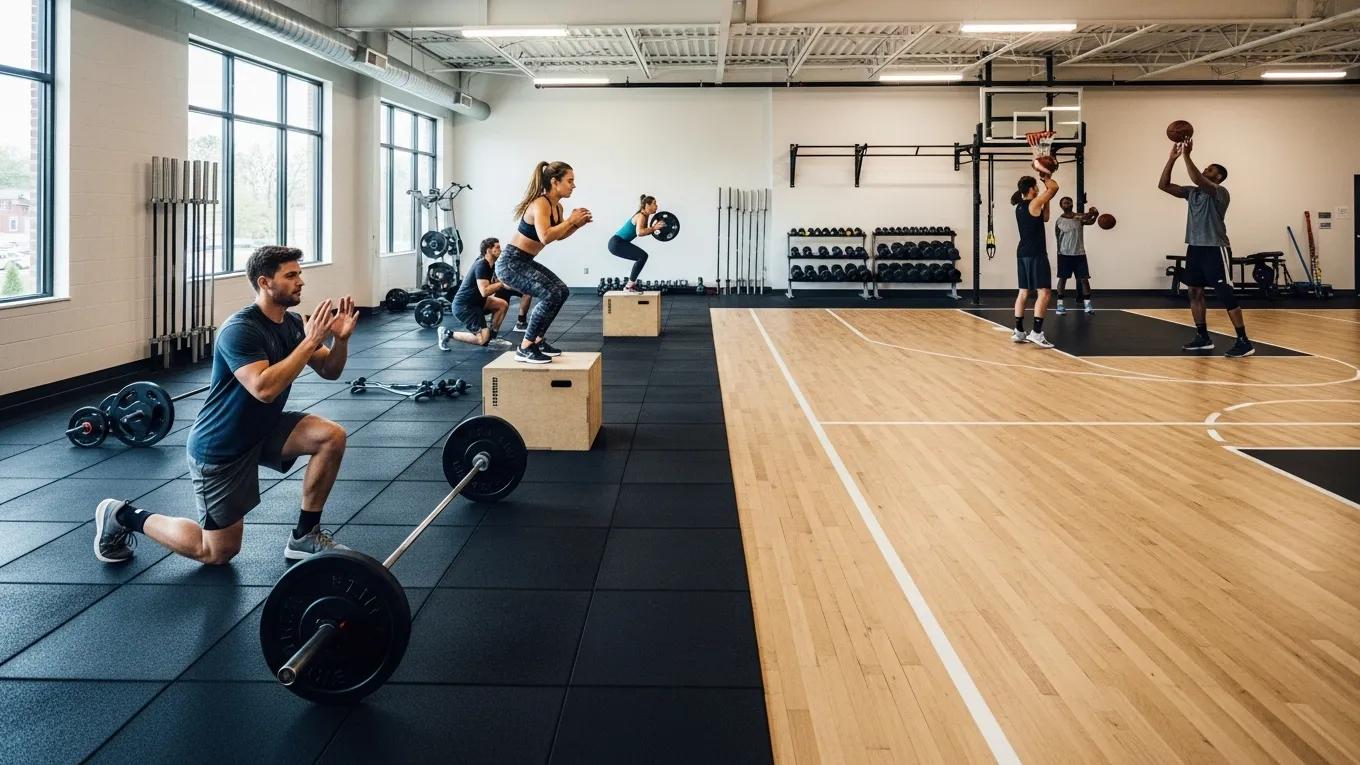
Flooring for athletic facilities combines surfaces that enhance performance with features that prioritise athlete safety. By integrating shock absorption, optimal bounce characteristics, and reliable traction, these systems minimise injury risk while maximising energy return. Facilities equipped with purpose-designed athletic surfaces often report improved user comfort and a reduction in strain-related incidents.
Which Flooring Types Enhance Athletic Performance and Safety?
- Rubber Flooring – Natural and synthetic compounds provide superior impact dampening and traction, ideal for weight rooms and multipurpose courts.
- Hardwood Sports Floors – Engineered maple panels offer excellent ball rebound and clear court markings, perfect for basketball and volleyball.
These materials support dynamic movement, reduce joint stress, and promote consistent play characteristics.
How Does Shock Absorption Improve Safety in Sports Flooring?
Shock absorption works by dispersing impact energy across the surface structure, thereby reducing peak forces. A multilayer rubber gym floor can absorb up to 45 percent of landing forces, which significantly lowers ligament strain and the likelihood of acute injuries. This protective mechanism helps extend an athlete's career and minimises downtime caused by sprains or stress fractures.
The Impact of Shock Absorption on Athletic Performance and Injury Prevention
Research highlights the critical role of shock absorption in athletic flooring for reducing injury rates and enhancing athlete performance. Studies indicate that proper shock absorption can decrease injury rates by up to 50% compared to inadequate flooring systems. This mechanism helps minimize joint stress, prevent overuse injuries like shin splints, and reduce athlete fatigue by dissipating impact forces across the surface structure.
This research directly supports the article's claims regarding how athletic flooring enhances performance and safety through shock absorption, reducing injury risk and athlete fatigue.
What Are the Noise Reduction Benefits of Athletic Flooring?
The sound-dampening qualities found in dense rubber slabs and underlayment layers absorb mechanical vibrations, effectively reducing ambient noise levels by up to 20 decibels in indoor fitness centres. Lower noise levels improve coaching communication, reduce fatigue, and prevent sound from disturbing adjacent areas.
How to Choose Flooring for Specific Athletic Facilities?
Selecting the right system involves considering three key criteria:
- Activity Type: High-impact activities like weightlifting require thicker, shock-absorbing rubber; court sports benefit from sprung hardwood.
- Multi-Use Versatility: Modular tile systems allow for rapid reconfiguration between different classes or events.
- Maintenance Regimen: Surfaces with antimicrobial additives simplify hygiene in environments prone to heavy sweating.
By matching usage patterns to specific flooring properties, facility managers can ensure optimal safety and performance for every athletic space.
How Do I Maintain and Clean Commercial and School Flooring Effectively?
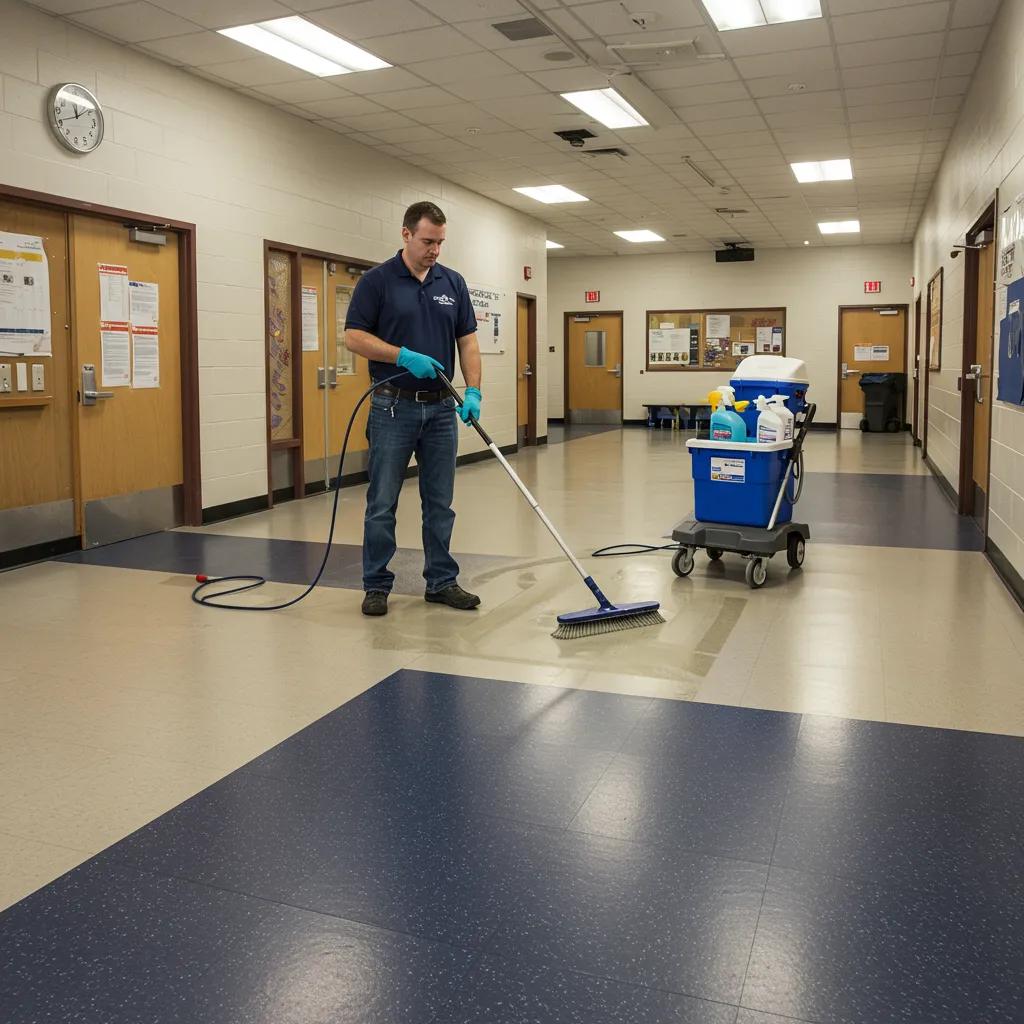
Effective maintenance involves a combination of regular cleaning schedules, the use of appropriate products, and preventative care to extend the life of your surfaces. Establishing clear tasks and intervals ensures consistent results, preserves warranties, and minimises the need for costly restorative work.
What Is the Recommended Cleaning Schedule for School and University Floors?
The following table outlines a typical maintenance schedule for educational facilities:
Adhering to these intervals prevents the accumulation of abrasive particles and preserves the integrity of the surface.
Which Cleaning Products and Methods Are Best for Different Flooring Types?
- Hardwood: pH-neutral wood cleaners and microfiber pads preserve finishes without causing the fibres to swell.
- Rubber: Mild detergent solutions prevent tackiness buildup and maintain traction properties.
- Vinyl: Neutral-pH vinyl cleaners remove scuffs without dulling the wear layer.
Using the correct products minimises surface degradation and extends manufacturer warranties.
How Can Regular Maintenance Extend Flooring Durability?
Consistent cleaning removes abrasive grit before it can embed into wear layers, significantly reducing the micro-scratches that accumulate over time and lead to visible wear. Scheduled inspections also allow for the early detection of seam separation or coating breakdown, enabling targeted repairs that halt further damage.
Optimizing Commercial Flooring Longevity Through Effective Maintenance
Effective maintenance practices are essential for extending the lifespan of commercial flooring and minimizing costly repairs. Consistent daily cleaning, including sweeping, vacuuming, and mopping, forms the foundation of proper floor care. Studies indicate that preventative measures, such as installing high-quality entryway matting, can prevent up to 80% of dirt and moisture from entering a building, significantly reducing wear and tear on floor finishes.
This research supports the article's emphasis on the importance of routine cleaning schedules, appropriate products, and preventative care to extend surface life and minimize maintenance costs for commercial and school flooring.
When Should Commercial or School Flooring Be Replaced?
Replace flooring when one or more of the following signs become apparent:
- The wear layer is reduced below 10 mil, compromising durability.
- Visible cracks or delamination are present, affecting safety.
- Repeated restoration costs exceed 50 percent of the replacement value.
Timely replacement safeguards occupant safety and ensures predictable budgeting for facility upgrades.
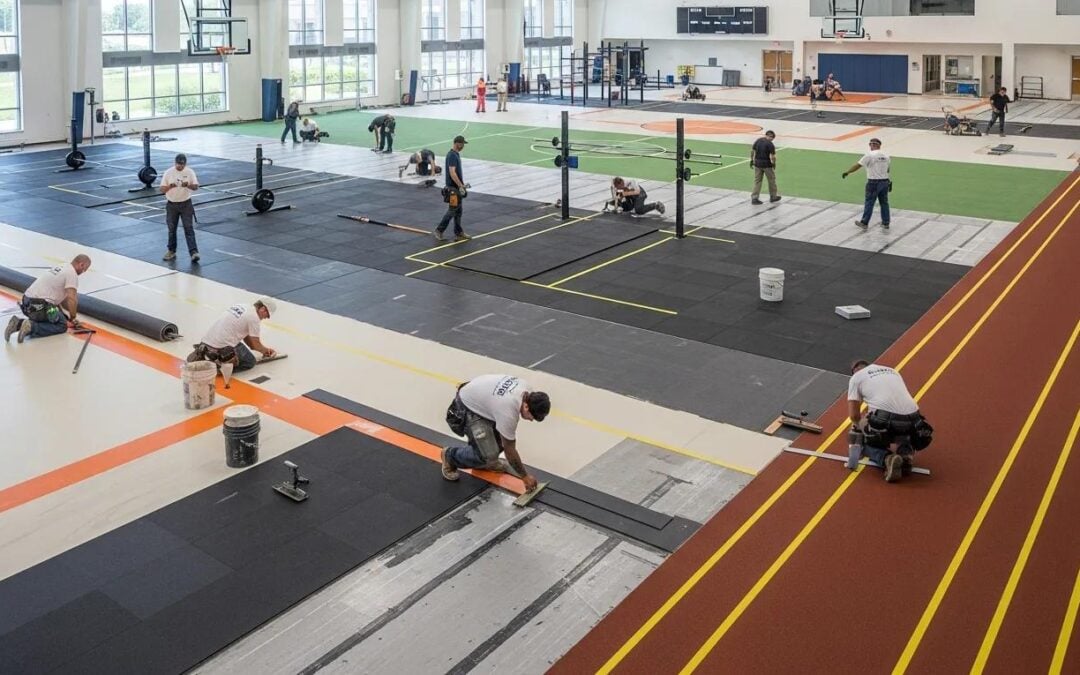
What Is the Commercial Flooring Installation Process?
A professional flooring installation follows a methodical sequence of steps to guarantee a flat, stable substrate and ensure long-term performance. Each stage addresses specific material requirements, from subfloor preparation to the application of the final protective coating.
What Are the Essential Steps in Commercial Flooring Installation?
- Subfloor Inspection and Repair – Identify any unevenness, moisture issues, or structural cracks.
- Moisture Mitigation – Apply vapor barriers or moisture-mitigation systems as needed.
- Leveling and Smoothing – Use self-leveling compounds to achieve a flat, sound surface.
- Adhesive or Fastening Application – Select adhesives or mechanical fastening methods appropriate for the flooring material.
- Material Placement and Seaming – Align planks, tiles, or sheets precisely to avoid gaps.
- Finishing and Trimming – Install transition strips and baseboards for a clean perimeter.
This structured approach minimises installation errors that can lead to premature failures.
How Long Does Installation Typically Take?
Accurate project duration scheduling allows facility managers to plan effectively around operational hours.
What Tools and Expertise Are Required for Professional Installation?
- Laser leveling tools and moisture meters for precise subfloor assessment.
- Trowels and rollers matched to the adhesive viscosity.
- Industry certifications verifying adherence to British Standards (BS 8204, BS 5385).
Certified professionals ensure warranty compliance and deliver consistent, high-quality results.
Can Vinyl Plank Flooring Be Installed Over Concrete?
Yes, provided that moisture levels are below 75 percent RH and the slab is level within 3 millimetres over 2 metres. Vapor barriers and self-leveling underlayments can address common moisture and flatness issues, enabling a stable vinyl plank installation.
How Much Does Commercial and Athletic Flooring Cost and What Factors Affect Pricing?
Flooring costs include materials, labour, and lifecycle considerations. Understanding the cost drivers and value ratios ensures a balanced investment that aligns budget constraints with performance expectations.
What Are the Main Cost Drivers in Commercial Flooring Projects?
- Material Quality and Thickness – Premium wear layers and underlayments command higher prices.
- Site Preparation Requirements – Moisture mitigation or leveling adds labour and material costs.
- Maintenance and Lifecycle Expenses – Surfaces requiring frequent restorative work increase long-term outlay.
Evaluating the total cost of ownership clarifies the initial investment versus ongoing maintenance obligations.
How Does Flooring Durability Impact Long-Term Investment Value?
Highly durable systems may have an upfront cost that is 15–25 percent higher but can extend replacement cycles by 5–7 years. This reduces operational disruptions and spreads capital expenditure over a longer asset life, improving the return on investment.
Are There Budget-Friendly Flooring Options That Don’t Compromise Quality?
- Rubber interlocking tiles offer moderate shock absorption and easy replacement at a lower material cost.
- Luxury Vinyl Tile (LVT) provides realistic wood or stone aesthetics with water resistance and simplified upkeep.
- Standard epoxy coatings deliver seamless protection in warehouses at a fraction of the cost of decorative resin systems.
These options provide critical performance traits while respecting tighter capital allowances.
What Are the Different Types of Industrial and Commercial Flooring Explained?
Commercial and industrial environments require hard-wearing materials specifically designed for their operational stresses. Selecting the right type depends on factors such as chemical exposure, load capacities, and cleaning demands.
What Are the Benefits of Epoxy and Polyurethane Flooring for Industrial Use?
Epoxy and polyurethane combine to form hard, seamless coatings that resist chemical spills, heavy abrasion, and forklift traffic. Their monolithic installation prevents liquid ingress and simplifies daily cleaning, making them ideal for manufacturing plants and distribution centres.
How Does Concrete Flooring Perform in Warehouses and Heavy-Duty Areas?
Polished or treated concrete offers exceptional load capacity and requires minimal upkeep. Mechanical densifiers create a hardened surface that resists dusting, while topical sealers enhance slip resistance and chemical resistance for forklift traffic corridors.
What Are the Advantages of Luxury Vinyl Tile (LVT) in Commercial Spaces?
LVT offers realistic wood and stone visuals in a resilient, waterproof format. Its click-lock or adhesive installation allows for rapid replacement of damaged planks and supports hygienic cleaning in wet areas, such as healthcare or hospitality venues.
When Is Hardwood Flooring Suitable for Commercial Environments?
Hardwood is suitable for spaces where aesthetic warmth and the ability to refinish outweigh the need for heavy-duty usage. Boutique retail stores, hotel lobbies, and executive offices benefit from solid or engineered hardwood installations, provided that maintenance protocols are followed to prevent premature wear.
How Do Safety and Compliance Influence Commercial and Athletic Flooring Choices?
Flooring systems must comply with statutory regulations and safety standards to reduce liability and ensure occupant protection. Specifying surfaces with appropriate certifications and performance ratings safeguards both users and facility operators.
What Safety Features Should I Look for in Commercial Flooring?
- Slip Resistance (R-Rating) – Measured under wet conditions to verify traction.
- Impact Absorption – Tested for shock mitigation in athletic contexts.
- Fire Retardancy – Compliance with BS EN 13501-1 for flammability and smoke emission.
Selecting certified surfaces helps prevent accidents and supports regulatory compliance.
How Do Flooring Solutions Meet UK Building Regulations and Health & Safety Standards?
Conforming to UK Building Regulations involves:
- Verifying that surface slip ratings meet Approved Document M requirements for access floors.
- Ensuring resealable joints and impervious coatings in hygiene-critical zones, as per HSE guidance.
- Applying fire-rated coverings where escape routes and public assembly areas require enhanced protection.
UK Building Regulations and Safety Standards for Commercial Flooring
In the UK, commercial and public building flooring must comply with safety standards, including those outlined in Approved Documents M and K of the Building Regulations, which address slip resistance for areas like stairs and ramps. The British Standard BS 7976, aligned with Health and Safety Executive (HSE) guidelines, is commonly used to assess slip resistance, with Pendulum Test Values (PTV) of 36 or higher indicating a low risk of slip. Additionally, fire retardancy is classified under BS EN 13501-1, a European standard adopted in the UK, which categorizes materials based on their contribution to fire development and smoke emission.
This citation verifies the article's statements on safety features, compliance with UK Building Regulations (Approved Document M), and fire retardancy standards (BS EN 13501-1), which are crucial for occupant protection and liability reduction.
Are Commercial Carpets a Safe Choice for High-Traffic Areas?
Modern commercial carpets with integrated anti-slip backings and stain-resistant treatments can be safe for heavy footfall. However, they require rigorous cleaning regimes to prevent fibre wear and maintain slip performance, making them more suitable for offices and conference rooms than athletic halls.
How Can I Choose the Right Flooring for Schools and Universities?
Educational facilities require surfaces that balance safety, durability, and ease of maintenance. Sports halls, classrooms, and common areas each present unique challenges that flooring solutions must address through tailored properties.
What Are the Specific Flooring Requirements for School Sports Halls?
School sports halls need:
- High Durability – Wear layers resistant to scuffing from sports shoes and equipment.
- Impact Mitigation – Shock-absorbent underlays to reduce injury risk during physical education.
- Clear Court Markings – Durable inlay lines that withstand frequent cleaning.
Meeting these criteria protects students and preserves the hall's aesthetics over years of use.
How Does Athletic Flooring Support University Gym and Athletic Complex Needs?
University complexes host a wide range of activities, from weight training to intramural sports. Versatile flooring systems often combine zoned rubber underlays with hardwood or vinyl court areas, allowing coaches to adapt spaces quickly for various sports while maintaining performance and safety standards.
What Maintenance Challenges Are Unique to Educational Facilities?
- High Foot Traffic – Accelerates wear in corridors and entrances, necessitating robust entry mats and transitional flooring.
- Variable Cleaning Resources – Scheduling deep cleans around class timetables requires efficient, low-downtime procedures.
- Budget Constraints – Balancing performance specifications with fiscal limits often leads to phased installation strategies.
Understanding these factors guides the specification of cost-effective, long-lasting school flooring systems.
What Are the Best Practices for Gym Floor Installation and Maintenance?
Gym floor longevity starts with correct installation and continues through proactive care. Combining precise subfloor preparation with routine upkeep ensures that performance characteristics remain consistent over time.
How Is Rubber Gym Flooring Installed and Maintained?
- Surface Preparation – Confirm a smooth, level subfloor free of moisture.
- Tile or Sheet Placement – Use interlocking edges or pressure-sensitive adhesives for seamless joints.
- Routine Cleaning – Dry mop daily and periodically scrub with mild detergent to preserve grip.
Maintaining clean, debris-free surfaces optimises traction and extends the mat’s service life.
What Are the Considerations for Hardwood Gym Floor Installation?
- Precision Subfloor Leveling – Flatness within 1.5 mm over 2 m to prevent panel movement.
- Climate Control – Maintain consistent temperature and humidity to avoid plank warping.
- Protective Finishes – Apply multiple coats of UV-cured or water-based finishes to guard against abrasion.
Following these guidelines ensures even bounce characteristics and long-term structural stability.
How Do I Ensure Optimal Traction and Impact Absorption in Gym Flooring?
Combining material selection and maintenance yields the best results:
- Choose textured rubber for weight areas and sprung hardwood for courts.
- Reapply surface sealers annually to maintain friction coefficients.
- Use anti-fatigue mats in free-weight zones to support joint health and reduce slippage.
This integrated approach promotes athlete safety and performance throughout facility operations.
Selecting, installing, and maintaining athletic and commercial flooring requires careful consideration of material properties, performance needs, and budget realities. By applying industry best practices—from subfloor preparation to maintenance scheduling—facility managers can safeguard occupants, optimise lifecycle costs, and benefit from SPSurfacing.com’s proven expertise in delivering high-performance solutions for sporting and commercial venues.