
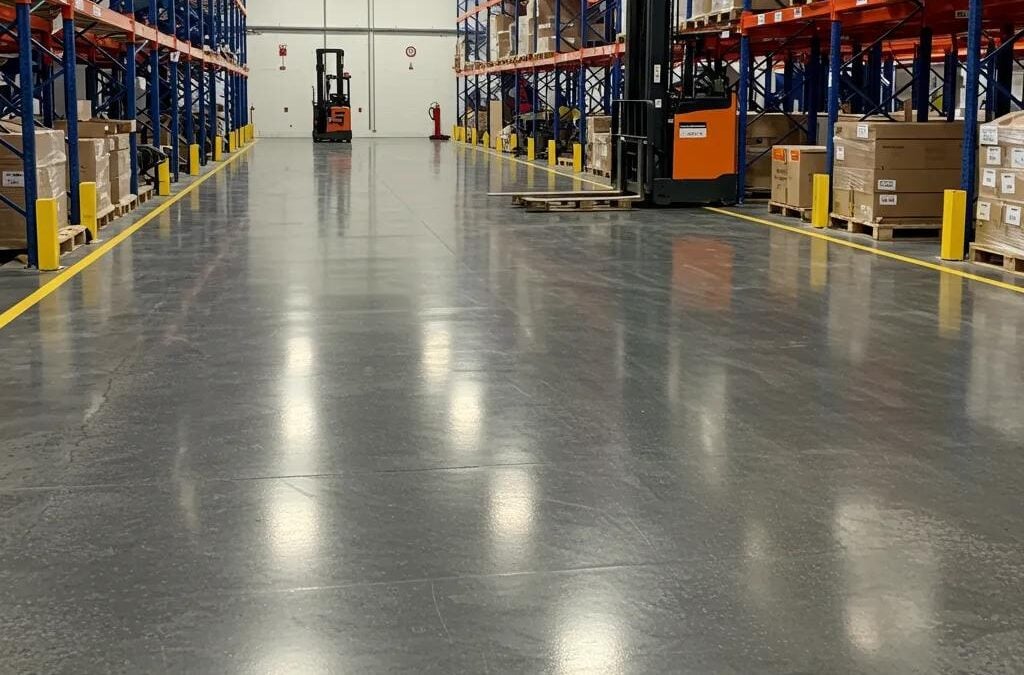
Robust Warehouse Flooring: Your Complete Guide to High-Performance, Enduring Solutions
Warehouses face constant demands from heavy traffic, chemical exposure, and mechanical stress, requiring flooring that consistently performs under pressure. This guide offers expert insights into the most resilient warehouse flooring options, explains how safety and durability factors guide your selection, breaks down costs and ROI within the UK market, outlines best practices for installation and maintenance, clarifies regulatory requirements, explores industry-specific needs, and highlights real-world success stories. Whether you oversee a logistics centre, retail distribution hub, or manufacturing facility, you'll discover the high-performance, long-lasting solutions SPSurfacing recommends for strong, efficient, and compliant warehouse floors.
What Are the Top Durable Flooring Types for Warehouses?
Warehouses need flooring systems that combine strength, chemical resistance, and straightforward maintenance to handle heavy machinery and high footfall. Four main categories stand out in industrial settings: epoxy coatings, polished concrete, industrial resin systems (polyurethane and MMA), and modular interlocking tiles. Each option provides distinct advantages tailored to specific operational demands, promoting both efficiency and safety.
What Are the Advantages of Epoxy Warehouse Flooring?
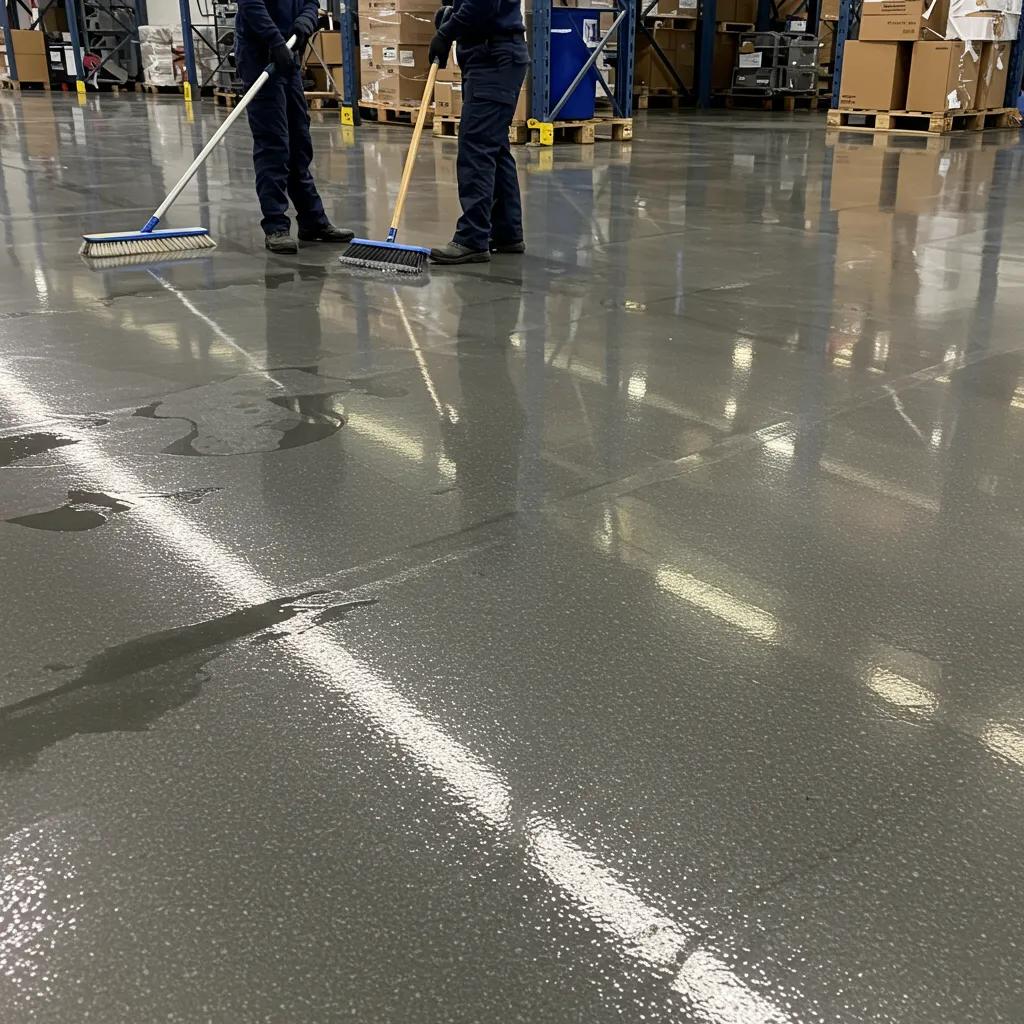
Epoxy warehouse flooring delivers a seamless, chemical-resistant surface capable of withstanding heavy loads and mechanical impact, thereby improving operational uptime and reducing maintenance downtime.
Epoxy coatings bond directly to concrete substrates, forming a robust, impermeable layer that resists oils, solvents, and abrasive wear. This system enhances brightness by reflecting light in low-ceiling environments and promotes safer workflows through integrated anti-slip aggregates. As specialists in industrial coatings, SPSurfacing outfits facilities with bespoke epoxy formulations designed for extended service life and simplified cleaning routines.
Epoxy Flooring Durability and Chemical Resistance
Epoxy systems combine cross-linked polymers and hardeners to achieve exceptional abrasion resistance and solvent impermeability. Typical performance metrics include:
- Abrasion resistance: up to 50 mg loss (Taber test)
- Chemical resistance: unaffected by acids, alkalis, and hydrocarbons
- Impact resistance: withstands forklift impacts without delamination
These characteristics support continuous operations, leading us to consider polished concrete for even greater longevity.
Superior Durability and Chemical Resistance of Epoxy Flooring Systems
Epoxy resin flooring systems are highly valued for their superior mechanical properties, including high tensile strength and exceptional chemical resistance, making them ideal for industrial settings exposed to various chemicals and heavy loads. These coatings create a durable, non-porous surface that effectively resists chemical penetration and abrasion, leading to an extended service life and simplified maintenance procedures.
cite: International Journal of Novel Trends and Innovation, 2025; MSC Floors, 2025; AI Coating, 2023; Innovations in Epoxy Flooring, 2024
How Does Polished Concrete Perform in Warehouse Environments?
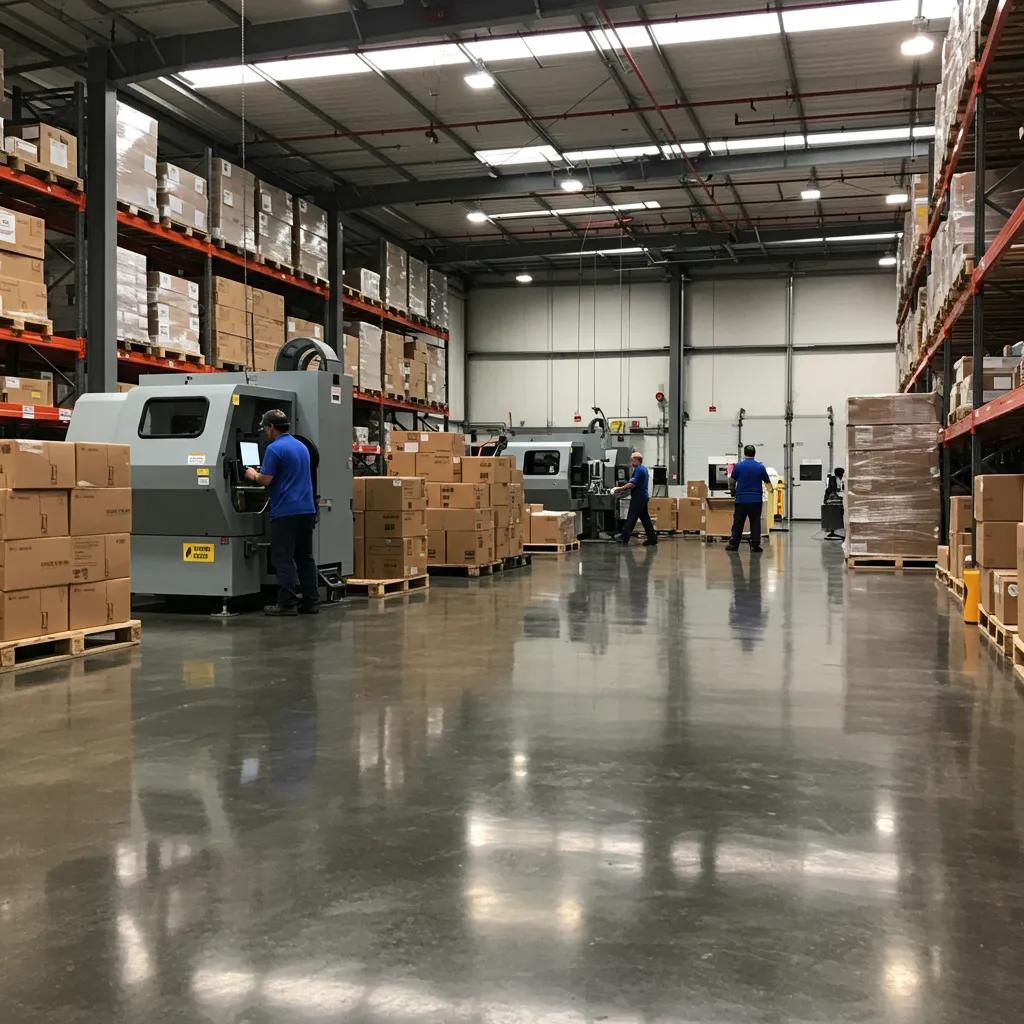
Polished concrete transforms existing slabs into ultra-durable, low-maintenance surfaces by refining aggregate and cement paste through diamond grinding and high-speed burnishing.
This finish enhances compressive strength and creates a dust-free environment, reducing respiratory hazards and cleaning frequency. Its reflective properties can improve light distribution, potentially lowering energy consumption. Facilities with sound structural slabs benefit from rapid turnaround times and minimal downtime when choosing polished concrete solutions.
Enhanced Light Reflectivity and Durability of Polished Concrete in Industrial Settings
Polished concrete significantly improves light distribution in warehouses, with studies indicating reflectivity rates 30-50% higher than untreated concrete, and light reflection values increasing to 70% or more. This reduces energy consumption and enhances visibility. Furthermore, polished concrete is recognized for its exceptional durability, capable of withstanding heavy machinery and constant traffic, which contributes to a longer service life compared to other flooring options.
cite: Titus Restoration, 2014; United Concrete Coating, 2022; How Warehouse Floor Reflectivity Can Enhance Lighting and Cut Energy Costs, 2025
Polished Concrete Finishing Techniques and Benefits
Polished concrete applications involve progressive grit sequences (from 30 to 3000) to achieve desired gloss levels. Key advantages include:
- Longevity: service life exceeding 15 years with proper care
- Low porosity: naturally resists spills and simplifies sanitation
- Reflectivity: up to 85% light reflectance, reducing lighting costs
Understanding resin alternatives sheds light on flexible, temperature-resistant flooring options.
What Are Industrial Resin Flooring Options: Polyurethane and MMA?
Industrial resin flooring encompasses polyurethane (PU) and methyl methacrylate (MMA) systems, offering flexibility, rapid cure times, and tolerance to thermal fluctuations.
Polyurethane screeds incorporate elastic polymers to cushion dynamic loads, making them ideal for freezers and cold storage areas. MMA coatings cure within hours, even at low temperatures, enabling swift floor reinstatement within 24–48 hours. Both systems provide high chemical resistance and require minimal maintenance, supporting continuous workflows in demanding manufacturing and logistics environments.
Polyurethane Flooring Flexibility and Temperature Resistance
PU screeds demonstrate:
- Shore D hardness: 85–90
- Thermal tolerance: −20 °C to +80 °C
- Crack bridging: maintains integrity over substrate movement
These characteristics guide the selection of modular tiling when installation speed is a top priority.
Why Opt for Modular Interlocking Tiles for Warehouse Floors?
Modular interlocking tiles install quickly without adhesives, allowing for phased rollouts and straightforward replacement of damaged sections. Made from recycled PVC or PP composites, these tiles resist heavy traffic and oil spills while offering impact cushioning under pallet trucks. Their modular design facilitates layout adjustments and future expansions with minimal disruption, presenting a cost-effective solution for busy distribution centres.
The choice between these flooring types hinges on your facility's traffic patterns, chemical exposure, and tolerance for downtime, leading us to examine how durability and safety factors influence selection.
How Do Durability and Safety Influence Warehouse Flooring Choices?
Durability and safety are critical considerations when selecting warehouse flooring. Operators must evaluate load-bearing capacities, abrasion and impact resistance, alongside slip resistance, fire performance, and regulatory compliance. Balancing these elements ensures a resilient, compliant surface that boosts productivity and reduces incident rates.
What Durability Factors Should You Consider for Heavy-Duty Warehouse Flooring?
Heavy-duty environments demand flooring with high compressive strength, excellent abrasion resistance, and robust impact tolerance. Key factors to consider include:
- Load capacity – Differentiate between static and dynamic loads (e.g., racking, forklifts)
- Abrasion resistance – Look for Taber abrasion values under 50 mg loss
- Impact resistance – Assess the ability to absorb shock without cracking
- Flexural strength – Evaluate resistance to bending under concentrated loads
Selecting materials with certified mechanical properties ensures long-term performance and helps avoid costly repairs.
How Crucial Are Slip Resistance and Safety Compliance in Warehouse Flooring?
Slip resistance directly impacts workplace safety. The HSE recommends a Pendulum Test Value (PTV) of 36 or higher for industrial floors. Floors must also meet the Workplace (Health, Safety and Welfare) Regulations 1992 requirement for stable, even, non-slippery surfaces.
UK Health and Safety Executive Guidelines for Warehouse Floor Slip Resistance
The UK Health and Safety Executive (HSE) recommends that industrial floors achieve a Pendulum Test Value (PTV) of 36 or higher, especially in wet or contaminated conditions, to ensure a low risk of slipping. This recommendation is in line with the Workplace (Health, Safety and Welfare) Regulations 1992, which mandate that workplace floors must be suitable, in good condition, and non-slippery to safeguard employee safety.
cite: Warehouse Flooring Regulations, 2025; HSE, 2025; Safe Tread; Slip Injury Accident Claim, 2023
Slip Resistance Ratings Explained: PTV and R-Ratings
PTV (Pendulum Test Value) – Measures dynamic friction; safe floors achieve ≥ 36R-Ratings (DIN 51130) – Classified from R9 to R13 based on slip angle; R11 or higher is suitable for high-moisture areas
Ensuring the correct slip rating helps reduce slip, trip, and fall incidents and supports regulatory compliance. Next, we will explore resistance to chemicals and temperature extremes.
What Chemical and Temperature Resistances Are Necessary for Industrial Floors?
Industrial floors are exposed to spills of oils, acids, alkalis, and solvents, as well as temperature fluctuations in cold stores and hot manufacturing zones. Key resistance criteria include:
- Chemical resistance – The surface should remain unchanged after 24 hours of exposure to common industrial chemicals
- Thermal shock tolerance – No cracking should occur from rapid temperature changes between −20 °C and +60 °C
- UV stability – Essential for outdoor loading bays or areas exposed to sunlight
Matching the floor's chemical composition to operational exposures guarantees its integrity and safety under harsh conditions.
Understanding these factors sets the stage for evaluating costs and return on investment.
What Are the Typical Costs and ROI of Warehouse Flooring Solutions in the UK?
Assessing the initial investment against the expected lifespan and maintenance requirements reveals the true cost of flooring. UK warehouse flooring options range from budget-friendly tiles to premium resin systems, with ROI driven by longevity, reduced downtime, and efficiency improvements.
How Much Does Warehouse Flooring Cost Per Square Metre?
The following table compares typical UK costs per square metre, including materials and installation labour:
Variations in cost reflect the extent of substrate preparation, the required thickness, and any added components. These figures aid in budget planning and help anticipate ROI timelines.
Cost Comparison Table: Flooring Types vs. Installation and Maintenance
The table above leads us to consider how maintenance frequency and repair needs influence long-term value.
What Factors Influence Long-Term Value and Maintenance Costs?
Long-term value is determined by:
- Lifespan versus replacement cycle – Fewer replacements lead to lower overall costs
- Repair costs – The ease of patching versus the need for full recoating
- Operational downtime – Rapid-cure systems minimise production losses
- Cleaning requirements – Low-porosity surfaces reduce cleaning time and expenses
Selecting the optimal system balances these factors, maximising ROI and ensuring operational continuity.
How Is Warehouse Flooring Installed and Maintained for Longevity?
Proper installation and proactive maintenance are fundamental to flooring longevity. Each system has specific preparation, application, and upkeep requirements that impact its performance and lifecycle costs.
What Is the Installation Process for Different Warehouse Flooring Types?
Installation typically follows these stages:
- Surface preparation – Diamond grinding or shot blasting to remove contaminants and create a suitable substrate profile
- Primer application – Enhances adhesion on porous concrete
- Base coat or screed – Builds thickness and resilience
- Top coat – Seals the surface and provides chemical and UV protection
- Curing – The time required varies by system: 24 hours for MMA, 7 days for epoxy
Once correct installation is assured, ongoing maintenance preserves the flooring's integrity.
Installation Layer Diagrams for Epoxy and Resin Floors
Visual diagrams illustrating primer, base, and top coats clarify the function and thickness ratios of each layer, ensuring consistent quality across projects. Detailed layer sequencing minimises adhesion failures and maximises performance.
How Can You Maintain and Repair Durable Warehouse Floors?
Scheduled maintenance extends the service life of your flooring and helps detect damage early:
- Routine cleaning – Use pH-neutral detergents and dust mops
- Inspections – Conduct quarterly reviews to identify cracks, delamination, or surface wear
- Repairs – Employ fast-setting resin mortars for localised patching
- Protective overlays – Install reinforced mats at loading docks
Preventative Maintenance Strategies for Heavy-Duty Floors
Implementing a regular maintenance schedule and training staff on spill management and proper equipment operation can prevent minor issues from becoming costly repairs, thereby sustaining optimal performance.
What Are the UK Regulations and Safety Standards for Warehouse Flooring?
UK regulatory frameworks ensure that floors support safe operations by mandating evenness, adequate grip, and stability. Compliance minimises liability and fosters a secure working environment.
Which UK Health and Safety Regulations Apply to Warehouse Floors?
Under the Workplace (Health, Safety and Welfare) Regulations 1992, floors must be even, slip-resistant, and properly drained. The Health and Safety Executive (HSE) provides guidance on floor grip, specifying a minimum PTV of 36. Fire performance is governed by Building Regulations, requiring certain areas to meet A1-fl classification.
UK HSE Floor Safety Compliance Checklist
- Surface evenness within 2 mm over a 2 m span
- PTV ≥ 36 in all operational zones
- Appropriate drainage slopes and channels
- Fire rating compliance for exit routes
Adherence to these requirements is essential for safe daily operations. Next, we will explore how floor markings add further safety layers.
How Do Floor Markings and Colour-Coding Enhance Warehouse Safety?
Floor markings clearly designate pedestrian walkways, hazard zones, and equipment routes, reducing the risk of collisions and improving traffic flow. High-visibility epoxy or thermoplastic lines offer excellent resistance to abrasion and chemical exposure.
Floor Marking Colour Codes and Their Safety Functions
- Yellow – Indicates caution areas and aisle boundaries
- Red – Marks fire equipment locations and emergency routes
- Green – Designates safe pathways and assembly points
- Blue – Provides general information and marks traffic lanes
Clear, colour-coded guidance complements surface grip, contributing to an organised and secure environment.
How Do Industry-Specific Needs Influence Warehouse Flooring Choices?
Different sectors present unique flooring requirements, ranging from impact absorption in athletic facilities to electrostatic discharge (ESD) control in electronics manufacturing. Understanding these specific demands ensures optimal performance and compliance.
What Flooring Solutions Are Best for Athletic Facilities and Schools?
Athletic and educational facilities prioritise impact absorption, hygiene, and slip resistance. PU sports flooring systems often include antibacterial coatings, shock-absorbent underlays, and textured finishes to ensure safety for students and athletes. Their flexibility and ease of cleaning make them suitable for multi-purpose halls and equipment areas.
How Are Warehouse Floors Adapted for Chemical, ESD, and Cold Storage Environments?
Specialist flooring solutions incorporate conductive aggregates for electrostatic discharge protection, high-grade resin blends for resistance to aggressive chemicals, and PU screeds specifically engineered for sub-zero temperatures. These adaptations protect sensitive products and equipment, maintaining operational integrity in specialised environments.
What Are Commercial Client Requirements for Durable Warehouse Flooring?
Clients in retail distribution and light manufacturing typically seek flooring that speeds up order picking and minimises maintenance. Polished concrete, combined with integrated joint sealants and protective epoxy wash coats, offers an excellent balance of durability, reflectivity, and low upkeep, thereby enhancing operational efficiency and safety.
Recognising these tailored needs leads us to examine real-world applications.
What Real-World Examples Demonstrate Durable Warehouse Flooring Success?
Case studies demonstrate how high-performance floor systems deliver measurable benefits across various warehouse settings, reinforcing the value of selecting and implementing best practices.
Which Projects Showcase Epoxy and Resin Flooring Durability?
In a UK logistics centre handling chemical solvents, a 3 mm epoxy system installed over diamond-prepared concrete eliminated slip incidents and reduced cleaning time by 40%. Fast-curing MMA coatings applied in adjacent aisles allowed for a 24-hour turnaround, maintaining operational throughput during application.
Case Study: Epoxy Flooring in a High-Traffic Logistics Warehouse
A major parcel hub experienced daily forklift operations exceeding 12 hours. SPSurfacing's enhanced epoxy formulation demonstrated resistance to abrasion and chemical spills for over six years, resulting in a 65% reduction in repair costs compared to previous coatings.
How Has Polished Concrete Improved Warehouse Operations?
A national retailer upgraded its distribution network to high-gloss polished concrete, increasing interior light levels by 30% and significantly reducing energy expenses. The dust-free surface minimised HVAC filter clogging and improved air quality, enhancing worker comfort and productivity.
These examples highlight the transformative impact of selecting the appropriate flooring system.
With this comprehensive overview of durable warehouse flooring options, you can confidently evaluate solutions that deliver lasting performance, safety compliance, and cost-effective operation. Whether you are considering epoxy coatings, polished concrete, resin systems, or modular tiles, partnering with flooring specialists ensures you receive tailored recommendations and expert installation for optimal results.