
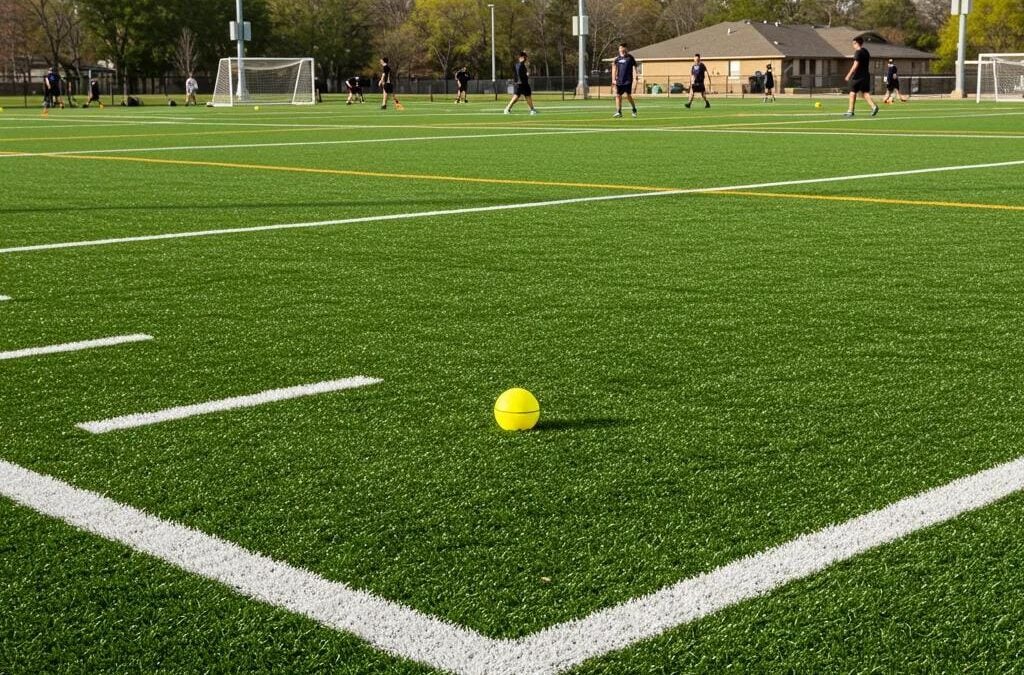
Top-Tier Performance Turf: Your Complete Guide to Synthetic Sports Surfaces and Athletic Field Solutions
Selecting the ideal synthetic turf can revolutionise athletic facilities, offering consistent playability, heightened athlete safety, and considerable long-term savings on upkeep. Facility managers frequently grapple with natural grass's downtime, uneven wear, and substantial water demands. However, today's advanced performance turf solutions effectively address these challenges with robust fibres, expertly engineered infill, and sophisticated drainage systems. In this comprehensive guide, we'll delve into the core advantages of performance turf systems, the premier synthetic options for UK facilities, detailed comparisons of infill materials, innovations in turf technology, commercial installation and maintenance best practices, crucial safety and environmental standards, and essential cost-benefit analyses. Whether you oversee a university pitch, a school playing field, or a commercial sports arena, understanding these high-quality performance turf options will empower you to choose the perfect surface, optimise athlete performance, and minimise lifecycle costs.
What Are the Key Benefits of High-Quality Performance Turf Systems?
High-quality performance turf systems ingeniously combine engineered synthetic fibres with specialised infill and shock-absorbing layers to elevate athlete performance, minimise injury risks, and significantly reduce ongoing maintenance requirements. By replacing natural grass with a uniform, slip-resistant surface, these systems guarantee dependable traction and predictable ball roll. Simultaneously, the integrated shock-absorbing components cushion impacts, safeguarding joints and ligaments.
How Does Performance Turf Enhance Athletic Performance and Safety?
Performance turf boosts speed, stability, and control by providing uniform traction through meticulously engineered fibre geometries. This optimises foot-to-surface interaction, thereby reducing slippage. The integrated shock pad effectively buffers impact forces, lowering peak G-Max values and contributing to the prevention of concussions and lower-limb injuries. Athletes benefit from a consistent surface stiffness that supports rapid directional changes and ensures reliable ball bounce across all playing conditions.
Why Is Durability and Low Maintenance Important for Synthetic Sports Surfacing?
Durability and low maintenance are paramount for high-traffic sports facilities that demand surfaces capable of withstanding tens of thousands of playing hours without constant repairs or reseeding. Synthetic fibres are inherently resistant to UV degradation and heavy footfall, while infill materials such as crumb rubber and silica sand help maintain turf height and resilience. The reduction in mowing, irrigation, and fertilisation translates into annual savings of up to 70 percent when compared to natural grass upkeep.
How Does Artificial Turf Enable Year-Round Playability?
Artificial turf systems ensure year-round playability thanks to their permeable backing and sub-base layers, which rapidly drain water, effectively preventing puddles and mud. The UV- and frost-resistant fibres are designed to withstand extreme temperatures, ensuring pitches remain playable through winter frosts, heavy downpours, and summer heatwaves. This translates to an estimated 30 percent increase in field availability, maximising opportunities for training sessions and match fixtures.
What Are the Long-Term Cost Savings of Installing Performance Turf?
Long-term cost savings are realised through dramatically reduced water consumption—often exceeding 50,000 gallons per field annually—the complete elimination of fertiliser and pesticide expenses, and minimal labour costs associated with mowing or patch repairs. Over a typical 15–20-year lifespan, total savings can surpass initial installation costs by 20–40 percent, offering a compelling return on investment within 5–7 years for many educational and commercial clients.
Which Synthetic Turf Options Are Best for Different Athletic Facilities in the UK?
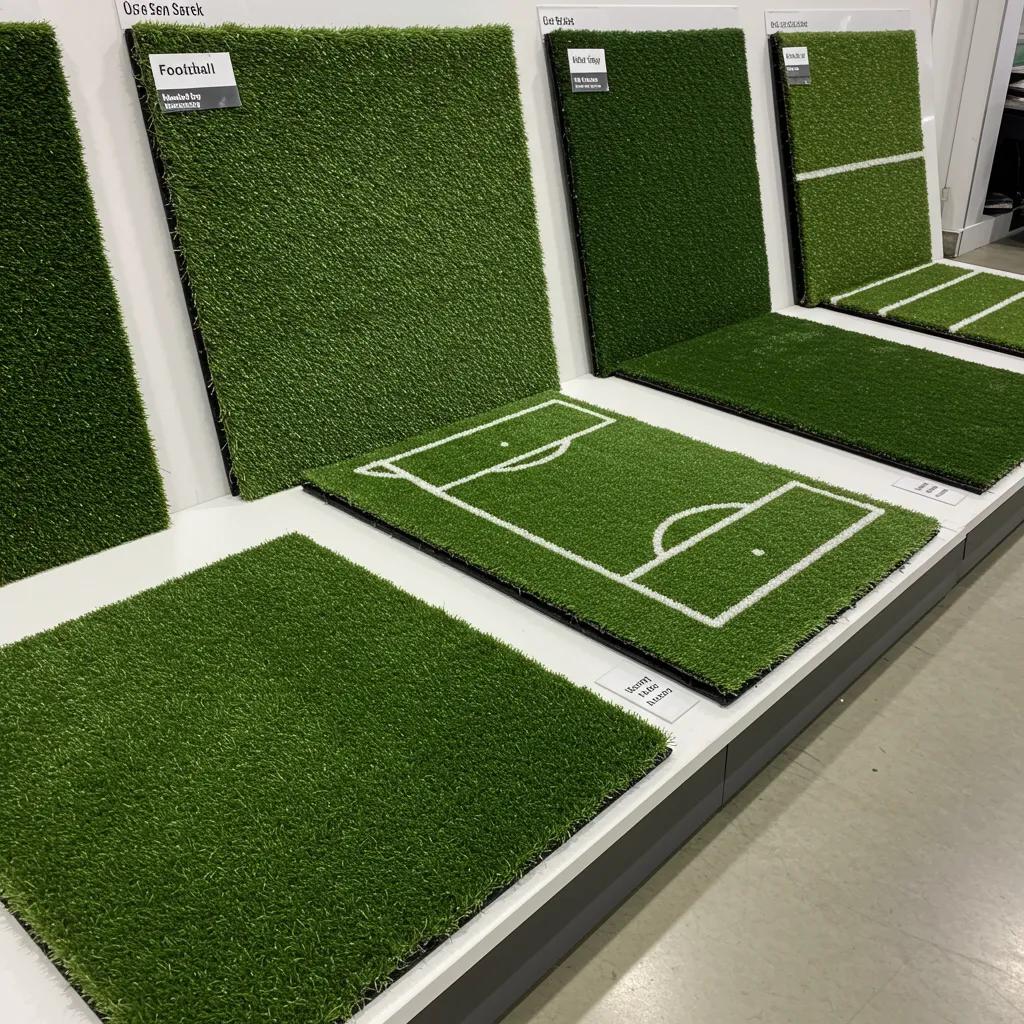
The selection of the appropriate synthetic turf hinges on specific sport requirements, anticipated traffic volumes, and crucial safety considerations. Bespoke turf solutions are tailored by adjusting pile height, fibre density, and infill combinations to match the unique performance profiles required for football, rugby, hockey, and multi-sport arenas, as well as high-traffic school and university grounds.
What Are the Best Artificial Turf Solutions for Football Pitches?
Football-specific turf typically features pile heights of 40–60 mm, which are ideal for achieving optimal ball roll and minimising bounce. Combined with dense fibre tufts, these systems effectively replicate the feel of natural grass. Certified to FIFA Quality Pro standards, these systems incorporate shock pads and crumb rubber infill to precisely control surface hardness (G-Max < 1.5 kN), ensuring suitability for competitive play.
FIFA Quality Programme: Global Standards
The FIFA Quality Programme establishes stringent standards for football products, technologies, and playing surfaces, including artificial turf. The FIFA Quality Pro mark signifies products that meet the highest criteria for performance, accuracy, safety, and durability, suitable for elite-level football.
This citation directly supports the article's reference to FIFA Quality Pro standards for football pitches, underscoring their role in ensuring optimal ball roll, controlled surface hardness, and suitability for competitive play.
How Does Rugby Field Artificial Grass Differ in Performance and Safety?
Rugby turf systems are engineered with a strong emphasis on durability and impact absorption, utilising robust fibre blends and reinforced backing layers. Pile heights of approximately 50 mm or more, coupled with increased infill densities, distribute player loads across a wider area. This design minimises stud penetration and offers enhanced protection against turf burn. The integration of a shock pad ensures peak impact forces remain below 200 g, aligning with international rugby safety guidelines.
What Synthetic Surfaces Are Ideal for Hockey Pitches and Multi-Sport Arenas?
Hockey pitches require short-pile, densely woven fibres to facilitate rapid ball speed and precise roll. Water-based systems often involve surface spraying to reduce friction and maintain optimal tack. For multi-sport arenas, versatile turf solutions are employed, featuring adjustable fibre blends and infill formulas designed to balance ball behaviour and shock absorption for a variety of sports, including basketball, tennis, and indoor football.
How Is Artificial Turf Used in Educational Institutions Like Schools and Universities?
Educational institutions benefit from artificial turf's high-traffic resilience and essential safety features, such as non-toxic infill, antimicrobial fibre coatings, and fall-attenuating shock pads. Pile heights of 25–40 mm are well-suited for school playgrounds, while university sports fields can leverage multi-sport carpet with integrated line marking. Customisable colour and branding options allow for campus identity integration without compromising durability.
What Are the Different Types of Artificial Turf Infill and Their Performance Benefits?
Infill materials play a crucial role in cushioning impacts, stabilising fibres, and facilitating drainage. Options range from recycled rubber to organic granules, with the choice of infill balancing safety, playability, and environmental considerations.
Below is a comparison of common infill types and their key attributes.
This comparison highlights how infill selection directly influences cushioning, drainage capabilities, and surface temperature, guiding facility managers toward the optimal choice for their specific sport and climate conditions.
What Are the Properties and Uses of Crumb Rubber Infill?
Crumb rubber infill effectively absorbs impact forces through its elastic tyre granules, capable of reducing peak G-forces by up to 20 percent. Its recycled composition aligns with sustainability objectives, though it may require periodic replenishment to maintain optimal infill depth and prevent compaction.
How Does Silica Sand Infill Support Stability and Drainage?
Silica sand infill provides excellent friction and locks fibres in place, ensuring consistently stable playing surfaces even under dynamic loads. Its angular grain structure promotes rapid drainage and resists microbial growth, although it offers less cushioning compared to more elastic infill options.
Why Choose Organic Infill Options Like Cork and Coconut Husk?
Organic infill materials, such as cork and coconut husk, offer natural cooling benefits by retaining moisture and releasing it gradually, which can reduce surface temperatures by 10–15 °C. Their biodegradable nature meets eco-certification requirements and helps avoid concerns associated with microplastic pollution.
What Are the Advantages of Coated Sand and Zeolite Infill for Synthetic Turf?
Coated sand undergoes polymer treatments that enhance grain cohesion, effectively preventing migration and ensuring uniform depth across the surface. Zeolite granules are adept at trapping odorous compounds and releasing moisture to cool the pitch. When used together, these materials can extend the infill's effective lifespan by up to 30 percent.
How Do You Select the Right Infill for Your Athletic Facility?
When selecting an infill, it's crucial to consider the primary sport played, the expected traffic levels, prevailing climate conditions, and your budget constraints. Crumb rubber is ideal for high-impact fields, silica sand is well-suited for multi-use arenas, organic blends align with environmental goals, and coated infills provide effective odour control for pet areas or event spaces.
How Does Performance Turf Technology Improve Safety and Playability?
Performance turf technology integrates multiple engineered components—including shock pads, drainage layers, and advanced fibre materials—to create surfaces that not only protect athletes but also support consistent, high-level playability under a wide range of conditions.
What Role Do Shock Pad Systems Play in Injury Prevention?
Shock pad systems are installed beneath the turf carpet to effectively absorb and dissipate impact energy, capable of reducing G-Max scores by as much as 40 percent. Rigorously tested according to ASTM and FIFA protocols, these underlays cushion falls and minimise joint stress, thereby lowering the incidence of sprains and concussions.
F355 Standard Test Method for Impact Attenuation of Playing Surface Systems, Other Protective Sport Systems, and Materials Used for Athletics, Recreation and Play
The ASTM F355 standard outlines a test method to measure the impact attenuation, or "impact shock," of playing surfaces, including natural and artificial turf. This method quantifies the peak impact acceleration (G-Max) produced under specific conditions, with a maximum allowable G-Max often set below 200g for safety.
This standard directly validates the article's assertions regarding shock pads' ability to reduce G-Max values and the application of ASTM protocols in safety testing.
How Do Advanced Drainage Solutions Enhance Synthetic Pitch Performance?
Advanced drainage systems utilise permeable geotextiles, robust stone sub-bases, and precisely sloped surfaces to evacuate water at rates exceeding 100 litres per minute per square metre. This efficient runoff capability prevents surface pooling, maintains consistent ball roll, and significantly reduces downtime following heavy rainfall.
What Are the Key Turf Fibre Technologies Used in High-Performance Turf?
Modern turf fibres are distinguished by their polymer type—polyethylene for a soft, natural grass feel; nylon for exceptional resilience under stud impact; and polypropylene for superior UV stability—as well as their cross-section geometry. Shapes like C-shaped or diamond-shaped blades are specifically designed to optimise traction and ball contact.
These material choices fundamentally define the surface's performance characteristics, influencing its shock absorption capabilities, fibre resilience, and overall visual appeal for various sporting applications.
How Do UV-Resistant and Antimicrobial Features Benefit Artificial Grass?
UV-resistant additives are incorporated to shield turf fibres from degradation and colour fading, thereby extending the surface lifespan by up to 20 percent. Antimicrobial coatings actively inhibit the growth of bacteria and mould, ensuring a hygienic environment in high-use areas such as school playgrounds and fitness centres.
What Is the Process for Commercial Artificial Grass Installation and Maintenance?
Commercial artificial grass installation follows a meticulously structured sequence, from initial site preparation through to the final infill application. Regular maintenance is then essential to guarantee longevity, optimal safety, and sustained aesthetic appeal.
What Are the Steps Involved in Installing Performance Turf Systems?
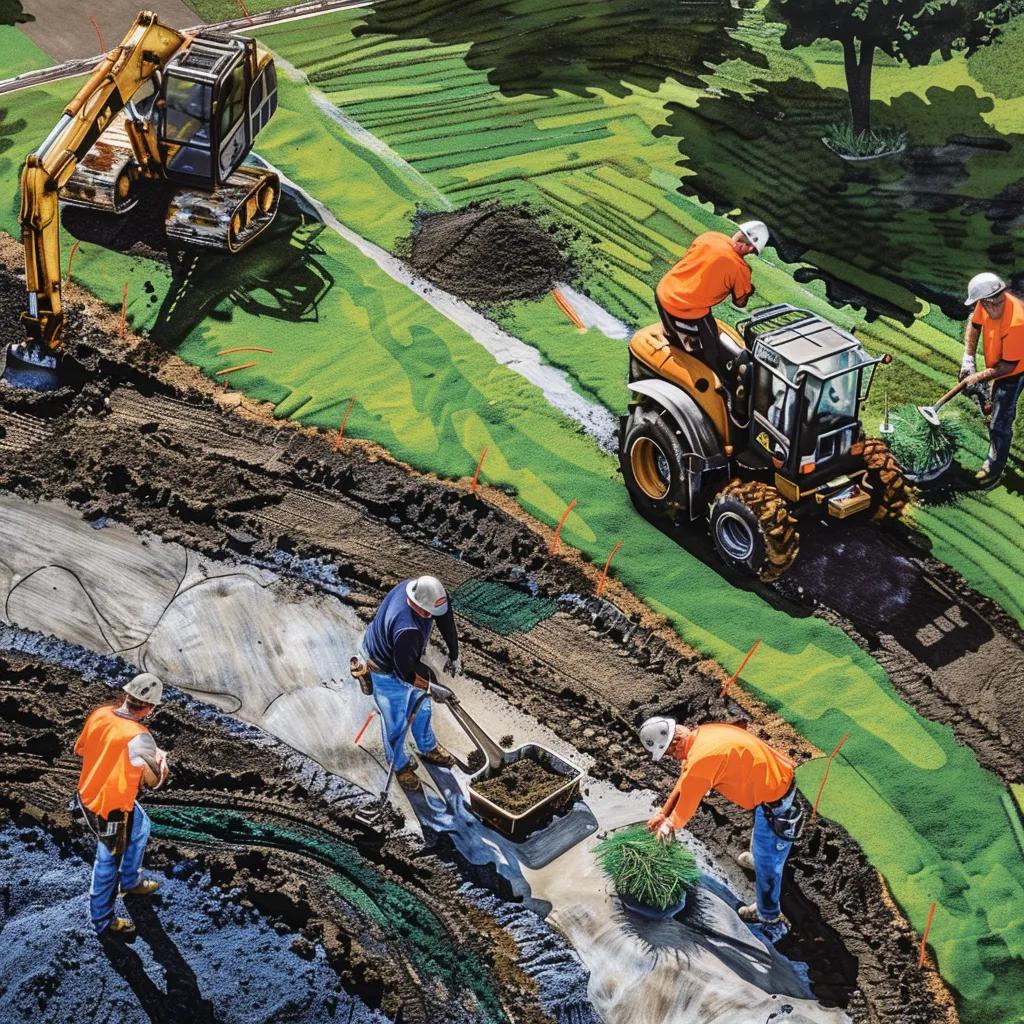
The installation process commences with precise site grading to establish optimal drainage slopes. This is followed by the laying of a compacted stone sub-base and the placement of a geotextile weed barrier. Subsequently, the turf carpet is carefully laid, seamed using high-strength adhesives, secured along its perimeter, and finally infilled with specified materials to the manufacturer's recommended depths.
How Should You Maintain Artificial Turf for Longevity and Performance?
Routine maintenance involves regular brushing to keep fibres upright and prevent matting, diligent debris removal to avoid odours and bacterial growth, periodic flushing with water-based disinfectants, and thorough inspection of seams for any signs of separation. Seasonal deep-cleaning sessions and infill top-ups are also crucial for maintaining optimal cushioning and consistent surface quality.
How Can Artificial Grass Be Repaired to Extend Its Lifespan?
Minor repairs can be effectively carried out using matched turf patches and seam tape applied beneath cut edges to restore carpet integrity. Infill redistribution is employed to correct any low spots. Professional inspections conducted every 2–3 years are vital for identifying potential backing wear or substrate issues, enabling targeted refurbishments rather than necessitating complete replacements.
What Safety Standards and Environmental Considerations Apply to Synthetic Sports Turf?
Synthetic sports turf must adhere to stringent safety certifications and address environmental impacts throughout its entire lifecycle, from installation to end-of-life recycling.
Which Certifications Ensure Artificial Turf Safety and Quality?
Key performance and safety standards include FIFA Quality Pro and ASTM F355 for impact attenuation, ISO 9001 for quality management systems, IPEMA for playground surfacing safety, and ISO 14001 for environmental management systems.
How Does Synthetic Turf Reduce Injury Risks in Athletic Facilities?
Synthetic turf significantly reduces injury risks by eliminating uneven playing surfaces, providing consistent slip resistance, and incorporating shock-absorbing layers that effectively mitigate peak impact forces. Laboratory-tested G-Max values consistently below 100 g align with recognised safety thresholds for contact sports.
What Are the Environmental Benefits and Concerns of Artificial Turf?
The environmental advantages include substantial water conservation, often exceeding 75 percent compared to natural grass, the elimination of harmful fertilisers and pesticides, and reduced carbon emissions from mowing equipment. Current concerns primarily revolve around potential microplastic generation from fibre wear and the complexities of end-of-life recycling, which have spurred the development of emerging turf recycling programs.
Artificial Turf Versus Natural Grass: A Case Study of Environmental Effects, Health Risks, Safety, and Cost
This study compares artificial turf and natural grass, highlighting concerns with artificial turf such as microplastic pollution, the presence of per- and polyfluoroalkyl substances (PFAS), and significantly higher surface temperatures. It also notes that natural grass can offer lower long-term expenses over a 25-year period.
This research directly corroborates the article's discussion on environmental considerations, such as microplastic generation and the imperative for eco-friendly alternatives, as well as the impact of surface temperature.
How Are Eco-Friendly and Lead-Free Turf Options Developed?
Eco-friendly turf options are developed using recycled or renewable infill materials like cork, coconut husk, and TPE (thermoplastic elastomer). Furthermore, advanced manufacturing processes ensure the use of lead-free pigments and stable polymer additives that meet stringent chemical safety regulations.
How Do Cost and ROI Influence the Choice of High-Performance Artificial Pitches?
Cost and return on investment (ROI) calculations are critical factors that guide facility directors in balancing upfront installation expenses against long-term operational savings and the crucial benefit of increased field availability.
What Are the Typical Installation Costs for Synthetic Sports Surfacing in the UK?
Installation costs for performance turf in the UK typically range from £8.00 to £15.00 per square foot. This variation depends on factors such as fibre quality, infill type, and the inclusion of a shock pad. Larger volume projects often benefit from economies of scale, with per-square-metre rates potentially decreasing by 10–15 percent for fields exceeding 5,000 m².
How Does Long-Term Maintenance Impact Overall Turf Investment?
Routine maintenance costs average £0.50–£1.00 per square metre annually, encompassing essential tasks like brushing, sanitation, and infill top-ups. Over a 20-year lifecycle, total maintenance expenditures represent a mere 20–30 percent of the initial installation cost, delivering substantial net savings when compared to natural grass alternatives.
What Financial Benefits Do Universities and Schools Gain from Artificial Turf?
Universities and schools commonly report 25–40 percent reductions in their annual grounds maintenance budgets. They also experience a significant 30 percent increase in field availability for both community and student use, alongside enhanced fundraising potential through branded, multi-purpose sports venues that attract events and lucrative sponsorship opportunities.
Athletic facilities seeking expert guidance on premium performance turf options can confidently turn to SPSurfacing. With a decade of experience delivering comprehensive synthetic sports surfacing solutions, our dedicated team excels in site assessments, bespoke design, and professional installation, ensuring your pitches consistently meet the highest performance and safety benchmarks.
By making informed choices regarding the right turf system, infill combination, and maintenance strategy, facility managers can unlock enhanced athlete performance, guarantee year-round playability, and achieve substantial cost savings—ultimately transforming their sports venues into high-value, enduring assets for decades to come.