

Choosing the Right Fitness Center Flooring: Your Complete Guide to Commercial Gym Surfaces and Durability
What Key Factors Should You Consider When Selecting Fitness Center Flooring?
How Do Different Workout Zones Influence Your Flooring Material Choice?
Why Is Shock Absorption So Important for Gym Flooring?
Impact of Sports Flooring on Jump Task Performance and Injury Prevention
Research indicates that sports flooring with shock-absorbing properties can significantly reduce impact forces during jump tasks. Studies have shown that different sports flooring types can absorb between 19% and 45% of peak impact force compared to a concrete surface, contributing to lower vertical instantaneous loading rates and potentially reducing injury risk.
How Does Durability Impact the Long-Term Performance of Your Flooring?
What Role Does Slip Resistance Play in Fitness Flooring Safety?
How Should Your Budget and Costs Influence Flooring Decisions?
How Do Rubber Gym Flooring Rolls Compare to Tiles and Mats?
What Are the Advantages of Rubber Rolls for Large Fitness Areas?
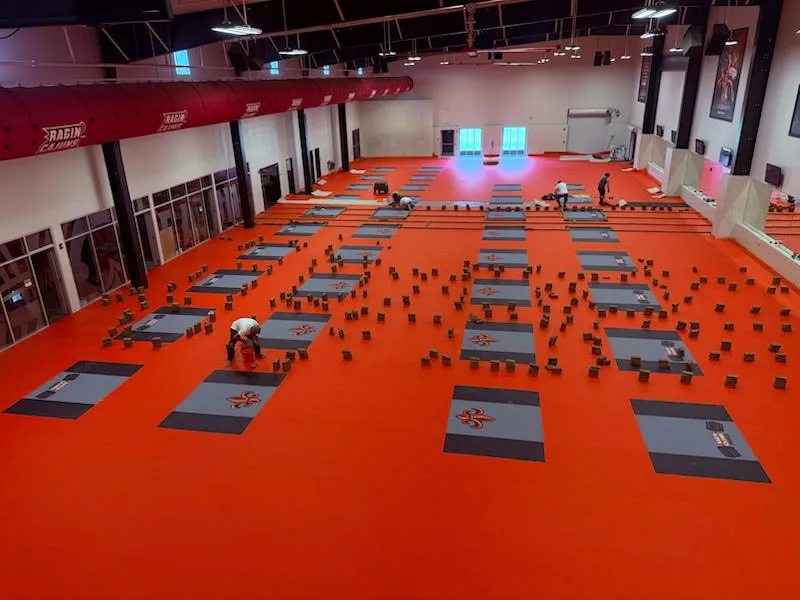
How Do Interlocking Rubber Tiles Offer Flexibility and Easy Installation?
When Are Rubber Mats the Best Choice for Targeted Protection?
What Are the Differences Between Recycled, Virgin, and Vulcanized Rubber?
| Composition Type | Resilience | Typical Odor Level | Lifecycle Expectancy |
|---|---|---|---|
| Recycled SBR Rubber | Moderate flexibility and rebound | Noticeable initial smell | 8–12 years |
| Virgin Rubber (EPDM) | High elasticity and UV resistance | Low residual odor | 10–15 years |
| Vulcanized Rubber | Enhanced hardness and non-porous | Minimal odor | 12–18 years |
What Are the Pros and Cons of Different Rubber Flooring Formats?
What Are the Advantages and Applications of Vinyl Flooring in Fitness Centers?

How Does Sheet Vinyl Provide Seamless and Easy-to-Clean Surfaces?
What Design Options Do Vinyl Tiles and Planks Offer?
How Durable and Chemical-Resistant Is Vinyl Flooring?
What Are the Maintenance Requirements for Vinyl Sports Flooring?
When Is Artificial Turf the Best Choice for Functional Training Areas?
What Are the Differences Between Indoor and Outdoor Artificial Turf?
How Does Turf with Padding Enhance Shock Absorption?
Impact Attenuation of Synthetic Turf Systems with Shock Pads
Research on synthetic turf systems with shock pads demonstrates improved impact attenuation during drop landings. Studies show that adding foam or low-density shock pads to synthetic turf can significantly reduce the first vertical peak ground reaction force by over 12% and the loading rate by more than 20% compared to surfaces without a shock pad, offering enhanced protection for lower extremities.
What Functional Training Activities Benefit Most from Artificial Turf?
What Are the Pros and Cons of Using Artificial Turf in Fitness Facilities?
What Specialized Flooring Options Are Available Beyond Rubber, Vinyl, and Turf?
How Does Polyurethane Flooring Support Multi-Purpose Athletic Facilities?
Why Is Hardwood Flooring Preferred for Courts and Aesthetic Appeal?
What Are the Benefits of Foam Flooring for Low-Impact and Budget-Friendly Gyms?
How Do Commercial Carpet Tiles Contribute to Comfort and Noise Reduction?
How Do Installation and Maintenance Impact the Longevity of Fitness Center Flooring?
Why Is Professional Installation Recommended for Gym Flooring?
What Are the Common Installation Methods for Different Flooring Types?
- Roll-out and seam welding for rubber and vinyl sheet installations
- Glue-down interlocking for vinyl tiles and carpet modules
- Loose-lay, interlocking for rubber and foam tiles
- Pad-and-pour for polyurethane systems
How Should Facility Managers Maintain Rubber, Vinyl, Turf, and Other Floors?
| Surface Type | Cleaning Method | Maintenance Frequency |
|---|---|---|
| Rubber Rolls | Sweep and damp-mop with neutral pH | Weekly cleaning; quarterly scrub |
| Vinyl Sheets | Damp-mop with mild cleanser | Bi-weekly cleaning; polish annually |
| Artificial Turf | Vacuum and rinse infill particles | Monthly brushing; infill top-up annually |
| Polyurethane | Mop with low-abrasion cleaner | Weekly cleaning; inspect coating annually |
What Are the Cost Implications of Installation and Maintenance?
What Are the Benefits of Choosing Sustainable and Eco-Friendly Gym Flooring Materials?
How Does Recycled Rubber Flooring Support Environmental Sustainability?
Environmental Benefits and Certifications of Sustainable Gym Flooring
Recycled rubber flooring offers significant environmental advantages by repurposing millions of discarded tires, thereby reducing landfill waste and lowering carbon footprints, with some processes reducing CO₂ emissions by over 70%. Furthermore, certifications such as GREENGUARD Gold and FloorScore ensure low volatile organic compound (VOC) emissions, contributing to healthier indoor air quality, while ISO 14001 signifies a manufacturer's commitment to environmental management.
What Certifications and Standards Ensure Eco-Friendly Flooring Quality?
- GREENGUARD for low-emission certification
- ISO 14001 for environmental management systems
- EN 1177 for impact-attenuation standards
- FloorScore for indoor air quality compliance
How Do Sustainable Materials Improve Indoor Air Quality and Health?
What Are the Long-Term Advantages of Eco-Friendly Flooring for Commercial Gyms?
How Can SPSurfacing.com Help You Choose and Install the Best Fitness Center Floor Materials?
What Expert Consultation Services Does SPSurfacing.com Offer?
- Facility-specific needs assessments based on traffic patterns and activity zones
- Material performance comparisons tailored to your budget and sustainability goals
- Custom design layouts to enhance branding and functional flow
How Does SPSurfacing.com Ensure High-Quality Installation and Maintenance Support?
- Certified installers with extensive subfloor preparation expertise
- Warranty-backed seam welding, adhesive application, and coating work
- Scheduled maintenance plans and training for your in-house staff