
Mastering Sports Floor Care: Essential Practices & Expert Solutions
Synthetic Turf: History, Design, Maintenance, and Athlete Safety
This clinical review emphasizes that, contrary to common misconceptions, synthetic turf surfaces require routine and consistent maintenance to ensure athlete health and safety. It underscores the critical role of the playing surface in both performance optimization and injury prevention across various levels of sport.
This study reinforces the article's central theme that regular maintenance is crucial for athlete safety and performance, even for modern sports surfaces, by preventing issues that could lead to injury.
What Are the Core Sports Floor Maintenance Services?
- Daily Cleaning – Essential for removing dust, debris, and loose grit that can cause abrasive damage.
- Deep Cleaning – Utilises advanced auto-scrubbers and pH-neutral detergents to tackle ingrained dirt and grime.
- Repair – Addresses issues like cracks, scratches, and uneven boards to restore a seamless, uniform surface.
- Resurfacing – Involves applying durable acrylic or polyurethane coatings to revitalise worn areas.
- Line Marking & Restoration – Repaints court lines and seals worn sections to ensure clear visual boundaries.
Research Status and Development Trends of Sports Flooring
This comprehensive review highlights the critical role of sports flooring in athlete safety and performance. It details how properties like friction coefficient and impact absorption are mandated by standards such as EN 14904, and discusses the importance of material selection, environmental adaptability, and consistent maintenance for optimal performance and longevity.
This research provides a comprehensive overview of the technical standards and material science behind sports flooring, directly supporting the article's claims about safety features, performance, and compliance with EN 14904.
What Are the Premier Cleaning Methods for Sports Floors?
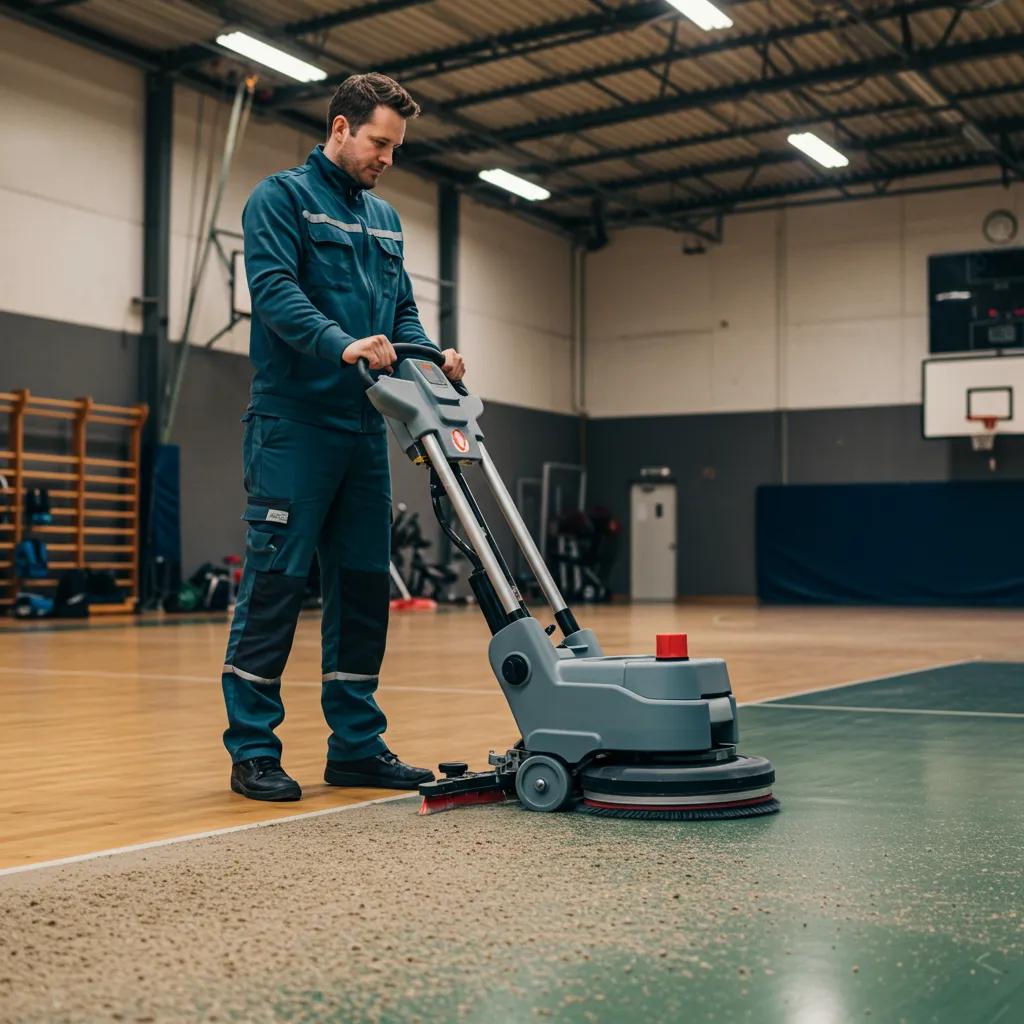
- Dust Mopping with high-quality microfiber heads is crucial for capturing loose debris and preventing surface scuffing.
- Auto-Scrubbing employs gentle, low-pressure brushes and pH-neutral cleaning solutions to effectively lift dirt without leaving any residue.
- Spot Cleaning involves targeted dampening with a towel to immediately address spills, preventing them from setting and causing stains.
How Does Consistent Repair Extend the Life of Your Sports Floor?
- Crack Filling expertly restores the integrity of hardwood boards, preventing moisture from penetrating and causing further damage.
- Scratch Buffing smooths out surface abrasions, ensuring a safe and consistent friction profile for athletes.
- Uneven Board Realignment precisely adjusts plank elevation, effectively eliminating potential trip hazards.
What Does Athletic Court Resurfacing Entail in the UK?
- Surface Preparation: This involves sanding or abrading existing wear layers to guarantee optimal adhesion for new coatings.
- Primer Application: A primer seals the substrate, ensuring a uniform base for the topcoat application.
- Coating Layers: Two to three carefully applied coats of high-performance acrylic or polyurethane materials provide exceptional durability and slip resistance.
- Line Painting: Precision application of water-based paint creates clear, sport-specific court layouts.
When Should You Schedule Line Marking and Floor Restoration?
- At the Start of High-Traffic Seasons: Coordinate re-marking well before league play commences to ensure clear court boundaries.
- During Your Annual Maintenance Window: Schedule restoration during off-peak periods to minimise any disruption to facility use.
- When Visible Fading or Chipping Occurs: Promptly repaint lines when contrast diminishes below critical safety thresholds.
- Post-Resurfacing: Integrate line marking as the final step in the resurfacing project to guarantee durable, precise demarcations.
How Do You Implement Top-Notch Gym Floor Cleaning Practices?
- Definition: Gym floor cleaning is the systematic process of removing all forms of debris and contamination.
- Purpose: Accumulated dirt and sweat can reduce slip resistance and accelerate wear on the floor's surface.
- Example: A commercial fitness centre successfully prevented scuff marks by adopting weekly auto-scrubber cycles.
What Are the Essential Daily Cleaning Routines for Gym Floors?
- Dust Mop the entire surface before opening to effectively capture fine particles.
- Sweep Under Equipment to collect any debris that has fallen from weight stations and benches.
- Spot Wipe Spills immediately using a damp cloth with a pH-neutral solution to prevent sticky residues from forming.
How Do You Perform a Deep Clean on Sports Floors?
- Step 1: Pre-Sweep thoroughly to remove all loose solids and particles.
- Step 2: Apply pH-Neutral Detergent, diluted precisely according to the manufacturer's instructions.
- Step 3: Auto-Scrub at a slow, controlled speed, ensuring the brushes cover the entire floor area.
- Step 4: Extract or Mop up the cleaning solution residue and allow the floor to air dry completely.
Which Cleaning Products Are Safest for Various Flooring Types?
- Hardwood: Opt for water-based, pH-neutral cleaners that are free from ammonia or wax-based additives.
- Rubber: Select non-foaming, non-alkaline formulas to preserve the rubber's elasticity and prevent premature cracking.
- Synthetic (Vinyl/PU): Use mild detergents with anti-static properties to protect the floor's seals and minimise dust attraction.
How Can Eco-Friendly Cleaning Solutions Benefit Your Sports Floors?
- Biodegradable Detergents break down naturally, preventing harmful chemical runoff.
- Plant-Derived Enzymes effectively target organic stains and odours without the need for harsh solvents.
- Microfibre Technology significantly reduces water and product consumption by efficiently trapping dirt within the fibres.
What Are the Best Practices for Maintaining Hardwood Sports Floors?
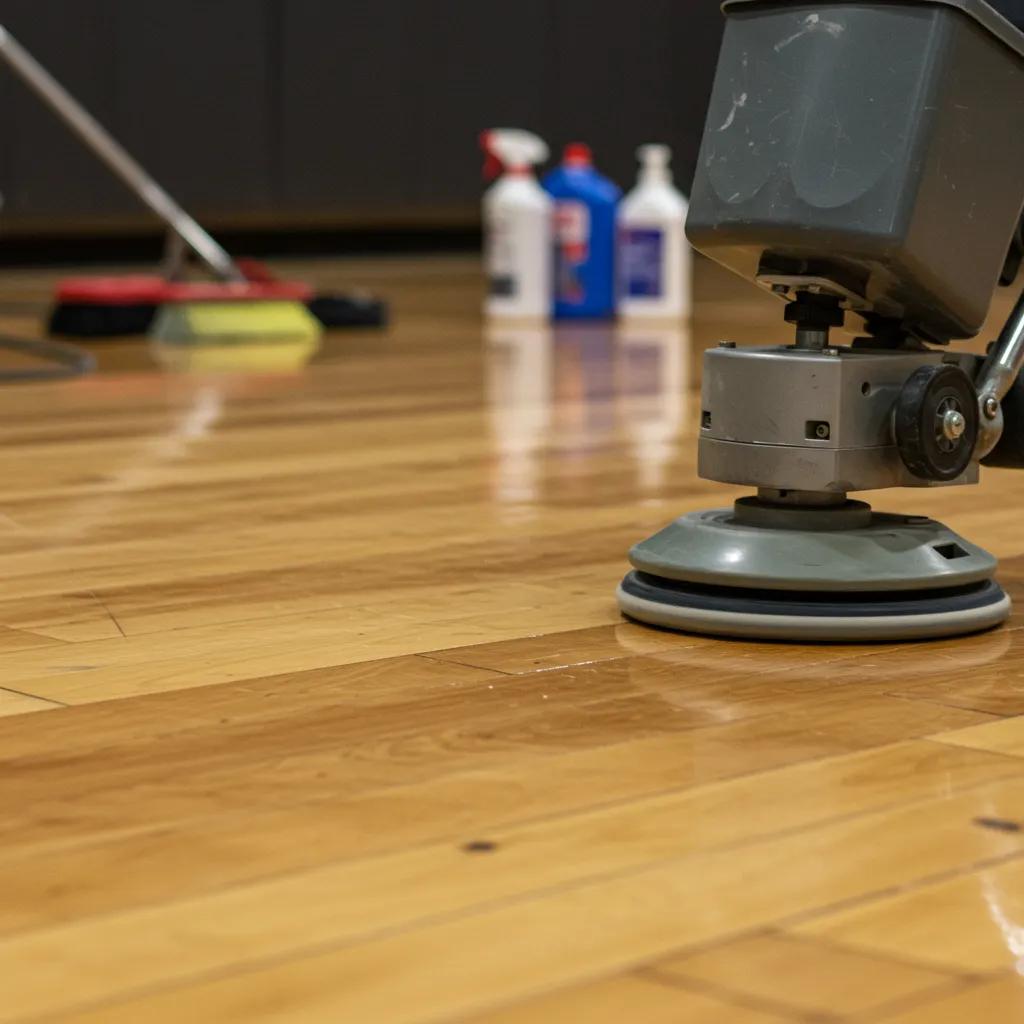
- Definition: Hardwood care encompasses conditioning, precise moisture control, and effective restoration techniques.
- Reason: Fluctuations in humidity can cause the wood to expand or contract, leading to surface degradation.
- Example: A school hall successfully prevented cupping and warping by installing dehumidifiers during periods of high humidity.
How Can You Effectively Control Moisture and Prevent Damage on Hardwood Floors?
| Floor Condition | Control Method | Impact on Durability |
|---|---|---|
| High Humidity | Utilise dehumidifiers set to maintain 40–60% Relative Humidity (RH) | Minimises cupping and reduces the risk of mould growth |
| Low Humidity | Deploy humidifiers to consistently maintain optimal RH levels | Prevents cracking, shrinkage, and the formation of gaps between boards |
| Seasonal Change | Monitor RH levels weekly using reliable gauges | Avoids finish flaking and the widening of board gaps |
What Are the Steps for Buffing and Sanding Hardwood Sports Floors?
- Buffing with a specialised floor machine and a fine abrasive pad to expertly remove light scuffs and refresh the existing finish.
- Light Sanding using orbital sanders is recommended for areas exhibiting deeper wear or significant coating degradation.
- Vacuum and use a Tack Cloth meticulously to extract all residual dust particles before any recoating takes place.
Which Protective Finishes Best Enhance Hardwood Floor Durability?
| Product | Finish Type | Key Benefit |
|---|---|---|
| Polyurethane Sealer | 2K Water-Based | Offers exceptional resistance to abrasion |
| UV-Cured Finish | UV Polymerised | Features a rapid cure time and low VOC emissions |
| Acrylic Emulsion | Water-Dilutable | Provides quick drying and is easy to recoat |
How Can You Effectively Maintain Rubber Gym Flooring?
- Definition: Rubber maintenance involves a combination of regular cleaning and protective treatments to retain its essential flexibility.
- Reason: If left untreated, rubber can dry out, become brittle, crack, or develop unpleasant odours over time.
- Example: A commercial gym successfully eliminated persistent floor odours by integrating enzyme-based spot treatments into their weekly cleaning protocols.
What Daily and Weekly Cleaning Practices Best Preserve Rubber Floors?
- Daily Vacuuming or Dry Dusting is essential for removing abrasive grit that can damage the surface.
- Weekly Damp Mopping with a pH-neutral, non-foaming cleaner effectively removes sweat and residue.
- Monthly Enzyme Spray application in high-use areas helps neutralise odours and break down organic deposits.
Which Products and Tools Are Recommended for Rubber Flooring?
- Soft-Brush Auto-Scrubbers are ideal for removing grime without gouging the rubber surface.
- pH-Neutral Rubber Cleaners are specifically formulated to prevent chemical breakdown of the rubber polymers.
- Microfibre Mops efficiently trap debris without causing scratches.
How Can You Manage Odour and Prevent Surface Damage on Rubber Floors?
- Enzymatic Spot Treatments effectively break down the molecular sources of organic odours.
- Protective Sealers specifically formulated for rubber prevent moisture ingress and staining.
- Regular Ventilation in exercise areas helps reduce humidity and inhibit microbial growth.
How Do You Develop a Sports Floor Maintenance Schedule for Athletic Facilities?
- Definition: A maintenance schedule is a detailed plan outlining the timing and specific tasks required to preserve the floor's optimal condition.
- Reason: Regular, proactive maintenance prevents costly emergency repairs and minimises disruptive downtime.
- Example: A university gym successfully extended its warranty coverage by strictly adhering to a quarterly service calendar.
What Are the Key Components of a Preventative Maintenance Plan?
- Task Catalogue: A comprehensive list detailing all cleaning, inspection, and service activities.
- Frequency Matrix: Assigns specific intervals (daily, weekly, monthly, annual) for each task.
- Responsibility Chart: Clearly designates roles for in-house staff or outsourced service providers.
- Budget Forecast: Provides an estimated cost breakdown for supplies, labour, and professional service contracts.
How Often Should Different Sports Floors Be Cleaned and Serviced?
| Floor Type | Cleaning Interval | Service Interval |
|---|---|---|
| Hardwood | Daily dust mop; monthly deep clean | Annual buff and reseal |
| Rubber | Daily vacuum; weekly mop | Bi-annual deep scrub and sealer application |
| Synthetic (PU) | Daily sweep; monthly auto-scrub | Annual recoating and line refresh |
What Safety Standards Must Sports Floor Maintenance Comply With?
- EN 14904 standards for slip resistance, shock absorption, and surface friction.
- Sport England Guidelines concerning court dimensions and line visibility.
- ISO 9001 quality management protocols for ensuring consistent service delivery.
What Are Common Sports Floor Damages and How Are They Repaired?
How Can You Identify and Fix Cracks, Scratches, and Uneven Surfaces?
- Visual Inspection: Conduct thorough visual checks to locate hairline cracks or surface splitting.
- Moisture Testing: Perform moisture tests beneath hardwood flooring to identify potential cupping or swelling.
- Level Gauge Use: Employ a level gauge on synthetic floors to detect any undulations or unevenness.
What Materials and Techniques Are Used in Sports Floor Resurfacing?
- Acrylic Coatings: Ideal for their rapid cure times and excellent UV stability.
- Polyurethane Systems: Offer superior abrasion resistance and enhanced flexibility.
- Sand-Through Bonding: A technique used to mechanically lock new coatings securely to the substrate.
- Heat Sealing: Applied to vinyl infills for seamless repair of synthetic surfaces.
When Is Professional Sports Hall Floor Refurbishment Essential?
- Surface Wear Depth Exceeds 0.5 mm on hardwood, indicating the finish layer is completely worn out.
- Flexible Surface Hardening on rubber floors, leading to cracking under load.
- Widespread Coating Delamination on synthetic PU floors, signalling a failure in adhesion.
How Does Professional Sports Floor Maintenance Protect Your Investment?
How Does Maintenance Improve Athlete Safety and Performance?
- Rejuvenated Wear Layers ensure uniform ball bounce and consistent slide characteristics.
- Restored Shock Absorption effectively reduces impact forces, thereby lowering the risk of injuries.
- Accurate Line Markings improve players' spatial awareness and contribute to smoother game flow.
Compliant sports floors and fall-related injuries: evidence from a residential care setting and updated meta-analysis for all patient care settings
This study and meta-analysis suggest that compliant sports flooring can significantly reduce the risk of fall injuries, particularly among older adults in residential care. It indicates that sports floors may offer similar injury risk-reducing potential as other novel shock-absorbing floors.
This research directly supports the article's assertion that proper sports floor maintenance and the inherent properties of quality flooring contribute to enhanced athlete safety by reducing injury risks.
What Are the Cost Benefits of Regular Maintenance Versus Full Replacement?
- Routine Cleaning & Repair typically costs only 10–20% of a full floor replacement.
- Extended Lifespan: Hardwood floors can last 8–12 years with maintenance, compared to 5–7 years without.
- Avoidance of Emergency Downtime preserves revenue streams from bookings and events.
How Can Tailored Maintenance Plans Suit Different Facility Types?
- Schools with lower usage schedules benefit from seasonal full-hall maintenance and annual buffing.
- Commercial Gyms require diligent weekly deep cleaning, monthly inspections, and semi-annual sealing.
- Universities & Sports Centres need a combination of daily cleaning, quarterly resurfacing, and regular EN 14904 compliance audits.