Why Experience Matters in Selecting Performance Turf & Rubber Flooring

Choosing the right performance turf and rubber flooring can make or break athlete safety and facility longevity. Facility managers often face challenges in balancing shock absorption, traction, and durability under heavy use. Relying on years of installation expertise minimizes costly mistakes and ensures optimal performance. In this guide, you will discover:

  1. The key benefits of working with seasoned flooring providers
  2. How turf and rubber flooring differ and which suits your application
  3. Critical factors for weightlifting and high-impact areas
  4. Why professional installation is non-negotiable
  5. Tailored solutions for universities, high schools, and commercial gyms
  6. Maintenance practices that extend flooring lifespan
  7. Answers to common purchasing and installation questions

Drawing on Sport Pro Surfacing’s proven track record, this article maps the most important considerations for selecting, installing, and maintaining high-performance athletic flooring.

What Are the Key Benefits of Experienced Flooring Providers for Gym and Athletic Facility Flooring?

Partnering with an experienced flooring provider delivers refined product selection, precise installation technique, and comprehensive aftercare—ensuring your investment continues to meet performance demands over time. Expertise streamlines project coordination, avoids suboptimal materials, and safeguards athlete safety through proven quality control.

How Does Experience Improve Performance Turf Selection and Installation?

Experience leads to informed choices of turf pile height, fiber type, and infill density that match specific training styles while optimizing drainage and wear resistance. Veteran installers understand subbase preparation, seam alignment, and infill distribution—minimizing turf deformation and ensuring consistent surface traction from day one.

Why Is Expertise Crucial for Rolled Rubber Flooring in Weight Rooms?
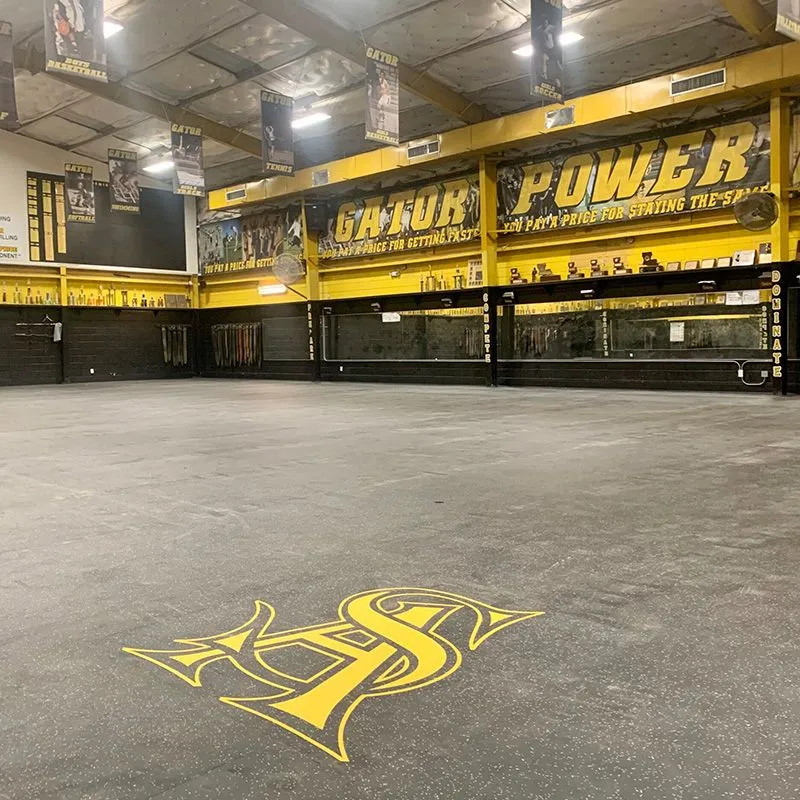
Rubber flooring in a gym with "GATOR POWER" banner, showcasing trophies and training equipment, emphasizing athlete safety and performance in a weight room setting.

Specialized knowledge guides the selection of roll thickness, material blend, and installation method to meet fluctuating loads from free weights and plate drops. Skilled professionals accurately assess subfloor flatness, adhesive compatibility, and seam placement to prevent curling edges and uneven wear.

What Safety and Durability Advantages Come from Professional Flooring Installation?

Professional installation delivers uniform shock attenuation, seamless transitions, and certified material performance—reducing injury risks and equipment damage. Quality control protocols verify adhesive coverage, compression resilience, and surface flatness, resulting in a durable floor system that withstands thousands of training cycles without degradation.

The Benefits of Rubber Flooring for Athlete Safety and Injury Prevention

Research indicates that rubber sports flooring significantly contributes to injury prevention by offering superior shock absorption and reducing stress on athletes’ joints. Its elasticity and resilience effectively absorb and redistribute impact forces, thereby lowering the risk of acute injuries like sprains and fractures, and mitigating chronic conditions from repetitive impact.
This research supports the article’s claims regarding the crucial role of rubber flooring in safeguarding athlete health and enhancing durability in high-impact areas.

How Do Performance Turf and Rubber Flooring Differ for Commercial Gym and Athletic Facility Use?

Performance turf and rolled rubber flooring address distinct training demands: turf excels in agility, sled pushes, and functional zones, while rubber flooring provides superior impact resistance for weightlifting and machine stations. Understanding their primary features helps match flooring type to facility programming.

What Are the Main Features of Performance Turf for Fitness Centers?

Performance turf offers a cushioned yet stable surface for dynamic movements, combining synthetic fibers, specialized backing, and infill materials that balance shock absorption with rapid energy return. Its drainage and UV resistance ensure consistent performance in indoor and covered outdoor environments.

Before comparing options, consider this breakdown of turf attributes and their functional impact:

Turf CharacteristicSpecificationFunctional Benefit
Pile Height10–20 mmProvides cushioning for running and plyometric exercises
Fiber MaterialPolyethylene/NylonDelivers realistic feel with high tensile strength
Infill CompositionRubber crumb/sandBalances surface firmness with controlled shock absorption
Drainage Rate>60 in/hr/sq ftPrevents water pooling and slipperiness
UV Stabilization5–8 year warrantyMaintains color and fiber integrity under sunlight exposure

This table highlights performance factors that inform turf system selection and prepares facility planners for weight and impact considerations on rubber surfaces.

How Does Rolled Rubber Flooring Provide Shock Absorption and Impact Resistance?

Rolled rubber flooring attenuates impact energy through dense, cross-linked rubber compounds that compress under load and rebound without permanent deformation. Its uniform material density and thickness distribute point loads, preventing floor damage and reducing stress on athlete joints.

Key shock-absorbing attributes include:

  • Material density ranging from 850 to 1,100 kg/m³
  • Thickness variants (8 mm, 10 mm, 12 mm) matched to expected load levels
  • Seamless installation options (glue-down or loose-lay) for uninterrupted energy dispersion

Experience ensures that rubber density and thickness align precisely with your weight room activities, preserving both safety and equipment life.

What Are the Differences Between Artificial Grass and Performance Turf?

Although artificial grass and performance turf share synthetic fiber technology, they differ in pile structure, backing strength, and infill requirements. Artificial grass often emphasizes visual realism for landscaping, whereas performance turf prioritizes resilience, traction, and consistent fiber recovery suited to athletic movements.

What Should You Consider When Purchasing Flooring for Weightlifting and High-Impact Areas?

Selecting flooring for weightlifting and high-impact spaces demands attention to thickness, material composition, and design features that protect both subfloor and equipment. Choices made at the outset ensure reliable energy management and reduce maintenance interventions later.

How Thick Should Rubber Flooring Be for Weight Rooms and CrossFit Boxes?

Optimal rubber thickness ranges between 8 mm and 12 mm for controlled shock absorption under heavy loaded barbells, with thicker options (15–20 mm) recommended for dedicated drop zones. Thickness directly correlates to energy dispersion efficiency and influences underlayment cost and installation complexity.

What Are the Best Flooring Materials for Heavy-Duty Weightlifting Areas?

The most robust options combine high-density rubber rolls with integrated foam underlayers or reinforced drop mats. Unique formulations of EPDM and SBR compounds deliver superior resilience, chemical resistance, and long-term shape recovery under repeated impact.

How Does Flooring Design Affect Athlete Safety and Equipment Longevity?

Flooring design elements—such as embossed surface textures, beveled ramp edges, and integrated drain channels—enhance traction, minimize trip hazards, and simplify cleaning. Proper design prevents plate bounce-back damage to machinery and extends the service life of both floor and equipment.

Why Is Professional Gym Rubber Flooring Installation Essential?

Professional installation transforms component performance into system reliability by addressing site-specific variables, environmental conditions, and long-term usage forecasts. DIY shortcuts often lead to subfloor contamination, adhesive failure, and uneven wear patterns.

What Are the Steps in a Professional Gym Flooring Installation Process?

  1. Site Inspection and Layout Planning – Assess subfloor flatness, moisture content, and load zones.
  2. Surface Preparation – Clean, level, and prime substrate for optimal adhesion.
  3. Material Acclimatization – Allow rubber rolls to adjust to ambient temperature and humidity.
  4. Precision Cutting and Seam Alignment – Execute factory-precision cuts and create tight seams.
  5. Adhesive Application and Roll Placement – Use recommended trowel size and adhesive open time.
  6. Seam Sealing and Edge Treatment – Secure perimeter edges with transition strips and sealant.

This sequence ensures a uniform, high-performance floor system that meets design specifications and manufacturer warranties.

Essential Steps for Professional Athletic Flooring Installation

Proper athletic flooring installation is a meticulous process that is critical for ensuring long-term performance and safety. Key steps include thorough subfloor preparation, such as assessing flatness and moisture levels, and careful material selection. Professional expertise in these stages is vital to prevent issues like poor adhesion and premature wear, which can compromise the flooring system’s integrity.
This information reinforces the article’s emphasis on the non-negotiable nature of professional installation for optimal athletic facility flooring.

How Does Expert Installation Impact Flooring Longevity and Performance?

Experts validate each installation stage with measurement tools and performance testing—confirming adhesion strength, compression resilience, and surface flatness. This attention to detail prevents premature delamination, avoids moisture-related failures, and sustains guaranteed shock absorption levels.

What Are the Risks of DIY Installation for Athletic Facility Flooring?

DIY installations often neglect proper subfloor moisture testing, adhesive open-time, and seam tolerances—leading to bubble formation, loose edges, and uneven riding surfaces. These issues escalate maintenance costs, increase safety hazards, and void manufacturer warranties.

How Can You Choose the Right Flooring Solution for Different Athletic Facilities?

Different facilities have distinct programming needs, traffic patterns, and budget constraints. A tailored selection process matches entity-specific requirements—whether a collegiate multi-sport venue, a high school weight room, or a high-foot-traffic fitness studio.

What Flooring Options Are Best for University Gyms and Multi-Sport Facilities?

University venues demand versatile surfacing that balances running tracks, courts, and strength zones. Hybrid systems combining interlocking rubber tiles with turf strips allow swift zone reconfiguration and resist heavy spectator traffic.

How Do High School Athletic Facility Flooring Needs Differ?

High schools often require cost-effective, low-maintenance options that cover basketball courts and weight rooms. Prefabricated rubber rolls with integrated color-coding for court lines and demarcations simplify installation and unify aesthetic branding.

What Are the Flooring Requirements for Commercial Fitness Centers?

Commercial clubs prioritize high-traffic durability, stain resistance, and ease of cleaning. Dense rubber planks with built-in antimicrobial backing and seamless transitions between studios and cardio areas ensure a hygienic environment that withstands constant turnover.

What Maintenance Practices Extend the Life of Performance Turf and Rubber Flooring?

Routine maintenance prevents premature wear and preserves safety characteristics. Adopting structured cleaning schedules and inspection protocols helps facility managers maintain peak flooring performance and manage total cost of ownership.

How Should You Maintain Rolled Rubber Flooring in Weight Rooms?

Implement these practices:

  • Daily Debris Removal – Sweep or vacuum to eliminate dust and grit that accelerate abrasion.
  • Weekly Damp Mopping – Use pH-neutral, non-ammonia cleaners to avoid surface degradation.
  • Quarterly Deep Clean – Employ low-speed scrubbers with soft-bristle brushes to remove ingrained residues.

Consistent care upholds surface traction and protects the material’s elasticity for ongoing shock absorption.

What Are Best Practices for Cleaning and Caring for Performance Turf?
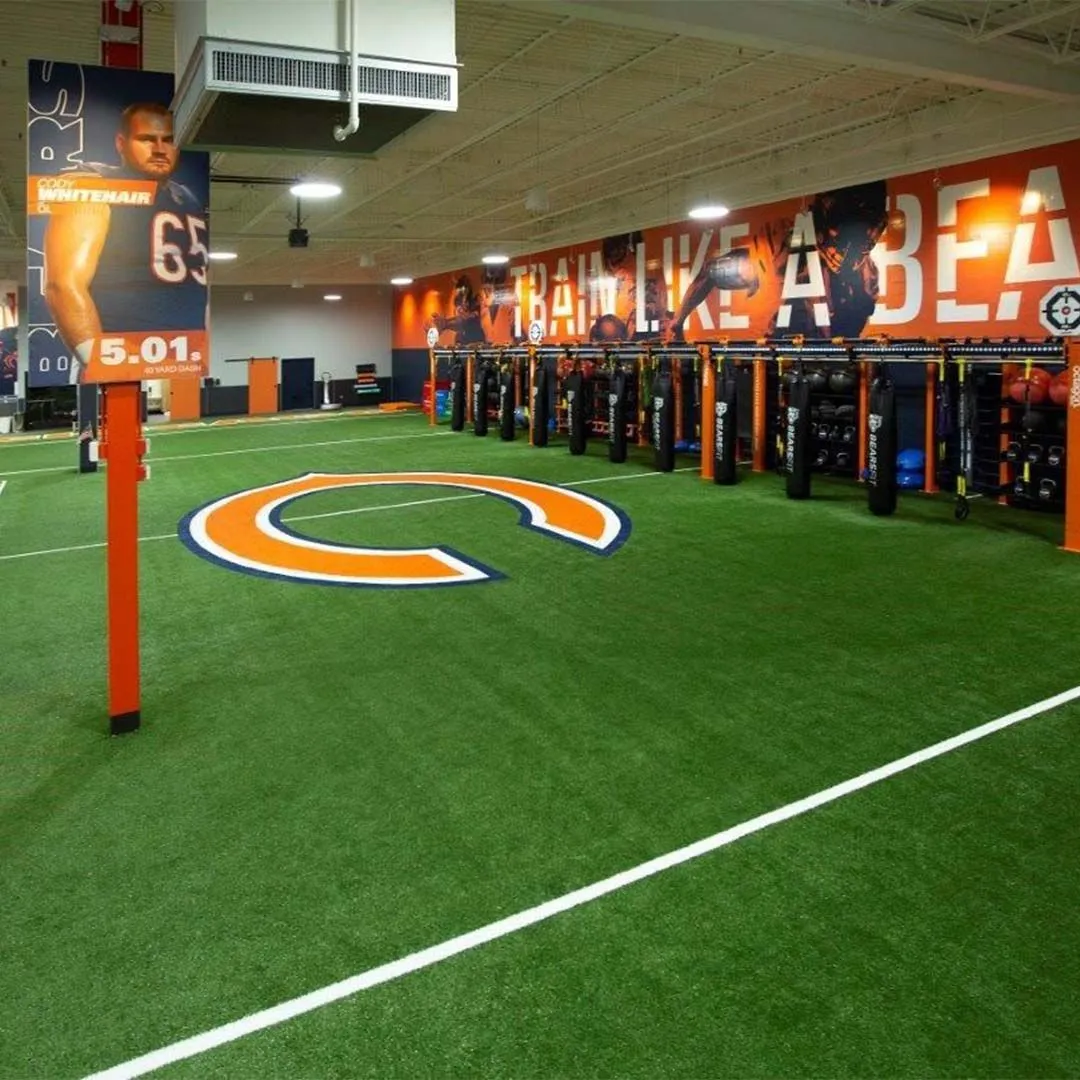
Weight room featuring performance turf flooring with a prominent orange and blue logo, surrounded by various workout equipment and motivational wall graphics emphasizing athletic training.

Cleaning turf involves:

  1. Debris Extraction – Use leaf blowers or turf vacuums to clear leaves and dust.
  2. Infill Grooming – Brush fibers to redistribute infill evenly and maintain pile uprightness.
  3. Sanitization – Apply biodegradable disinfectants to inhibit mold and microbial growth without harming turf fibers.

Proper care preserves consistent traction and reduces the risk of slip incidents.

How Does Proper Maintenance Affect Safety and Durability?

Routine inspections highlight seam stress, infill displacement, or surface tears before they escalate. Early detection and corrective maintenance maintain the engineered shock absorption, traction, and wear resistance that underpin athlete protection and equipment longevity.

What Are Common Questions About Purchasing and Installing Gym Flooring?

Professional insight into typical concerns equips decision-makers to refine project scopes, anticipate costs, and align expectations with facility use.

What Is the Best Flooring for a Gym Weight Room?

High-density rolled rubber flooring between 8 mm and 12 mm thick is generally the top choice for weight rooms, offering superior impact resistance, joint protection, and durability under heavy loads.

How Do You Install Rolled Rubber Gym Flooring Correctly?

Correct installation involves subfloor moisture testing, cleaning and priming, precise roll cutting, adhesive application per manufacturer guidelines, and seam sealing with recommended sealants to prevent lifting.

What Is the Difference Between Rubber Flooring and Turf for Athletic Use?

Rubber flooring excels in weight resistance and impact attenuation, while turf provides a dynamic surface ideal for sled pushes, agility drills, and speed training—each engineered to support specific movement patterns.

How Thick Should Gym Flooring Be for Different Athletic Activities?

– Weightlifting Areas: 8–12 mm rubber thickness
– Sled and Agility Zones: 10–15 mm turf with dense infill
– Group Exercise Studios: 6–8 mm vinyl or rubber planks for moderate impact

Selecting correct thickness ensures that energy management aligns with activity intensity and protects both athletes and subfloors.

Facility owners who invest in experienced partners not only optimize flooring performance but also unlock long-term value through reduced maintenance, enhanced safety, and sustained aesthetic appeal. By aligning material selection, installation precision, and tailored maintenance, your gym or athletic facility will support peak performance for years to come. Contact Sport Pro Surfacing to explore customized performance turf and rubber flooring solutions backed by proven expertise.